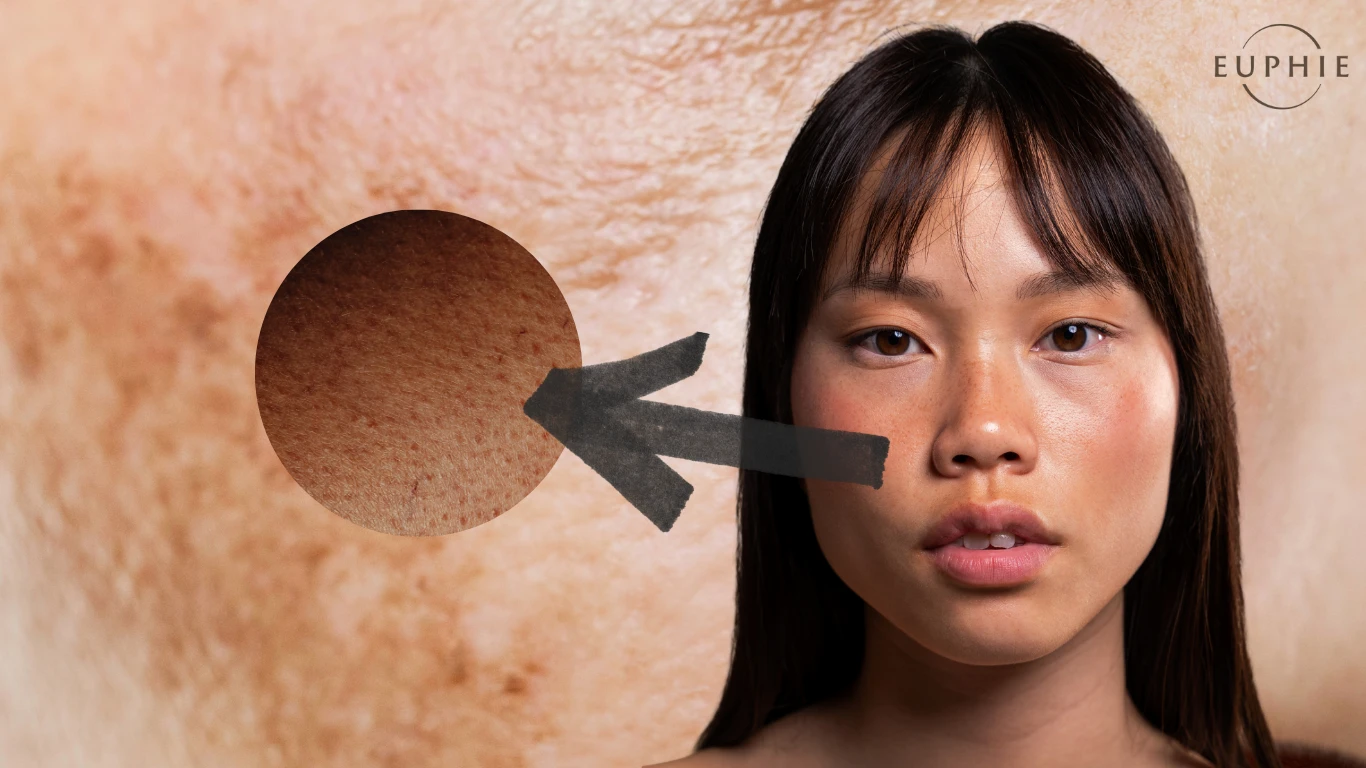
Dark spots, uneven skin tone, and marks left behind by acne can be frustrating. You might feel like nothing works, but the good news is that many hyperpigmentation concerns are manageable with the right care. In this article, we’ll talk about what causes common types of hyperpigmentation, why professional treatment can help, and how Euphie’s personalised treatments can support clearer, healthier skin.
Hyperpigmentation happens when the skin produces extra melanin, making some areas darker than the surrounding skin. This can show up as dark spots after acne, patches across the cheeks, or uneven colour on the forehead. Everyone’s skin reacts differently, so understanding your type of hyperpigmentation is the first step in choosing the right plan.
There isn’t just one type of dark spot. Each kind behaves differently, and knowing which one you have means you can choose treatments that are more likely to work for you.
These dark marks appear after the skin has healed from acne or irritation. Even when the skin feels smooth to the touch, the colour difference can remain for weeks or months. This condition is known as post inflammatory hyperpigmentation (PIH), and it is considered an acne mark rather than a true acne scar.
While PIH usually fades over time, professional treatments can help speed up the process and improve overall skin tone, especially when the marks are stubborn or widespread.
Melasma usually shows up as brown or grey patches on the cheeks, forehead, or upper lip, and is often triggered by sun exposure or hormonal changes. Unlike surface‑level dark spots, melasma sits a bit deeper in the skin. That’s why melasma treatment needs to be gentle, consistent, and tailored to you. Rushing or using overly harsh methods can sometimes make it worse.
Sun damage, previous skin conditions, or ageing can also leave dark marks. While these spots may not be caused by acne, they often respond well to professional treatments and personalised skincare routines that help even out tone and improve clarity.

Not all dark spots are the same, and trying random products without understanding the root cause often leads to disappointment. Factors like your skin tone, the depth of hyperpigmentation, and how long it’s been there all matter.
A professional assessment at a place like Euphie ensures treatments are chosen for your skin, not just based on what worked for someone else. This personalised approach often leads to better, longer‑lasting results.
Euphie combines advanced technologies with supportive care so you can treat hyperpigmentation safely while keeping your skin healthy. Here’s how we approach it with four key treatments you might consider.
Pico Majesty Laser is an advanced picosecond laser that targets hyperpigmentation with ultra‑short energy bursts. It works by breaking down pigment clusters into tiny particles that your body can naturally clear, helping to lighten stubborn dark spots, post‑acne marks, and melasma.
This treatment is precise, gentle, and suitable for a range of skin tones. Pico Majesty Laser also supports skin renewal and can improve uneven skin tone caused by sun exposure or hormonal changes. At Euphie, the laser is customised for your skin type and hyperpigmentation pattern, ensuring a balance of comfort and results while keeping the skin healthy and calm.
Sylfirm X 360 is a dual‑wave radiofrequency microneedling treatment that targets stubborn hyperpigmentation at its root. It combines precise needling with controlled RF energy to improve skin tone, fade discolouration, and calm inflammation.
This option is especially helpful if you’ve tried other brightening treatments but still see lingering melasma, uneven tone, or redness that doesn’t respond fully to surface‑level approaches. Sylfirm X 360 also strengthens the skin barrier, making it a good fit for sensitive or reactive skin.
The treatment works by stimulating collagen, strengthening the skin’s base layer and reducing inflammation, helping to reduce both hyperpigmentation and redness.
Skinbooster is a deeply hydrating injectable that helps brighten skin from within. Rather than just treating the surface, it delivers hydration and brightening ingredients like hyaluronic acid and antioxidants directly into the dermis, helping to fade post‑acne marks, dull tone, and uneven hyperpigmentation over time.
This treatment supports skin renewal and improves moisture retention, creating a clearer and more radiant complexion without the need for harsh peeling or intense downtime. Skinbooster works well on its own or alongside other treatments to maintain hydration and glow.
Oral Tranexamic Acid is a medically guided option that supports hyperpigmentation improvement from within. Tranexamic acid has been shown in clinical studies to help reduce hyperpigmentation in conditions like melasma and post inflammatory hyperpigmentation, especially when used under professional supervision.
It works by targeting the processes that contribute to excess melanin production and can be combined with other treatments to enhance results. This option is typically recommended as part of a broader plan and under medical guidance to ensure it’s safe and suitable for you.
Hyperpigmentation improves gradually rather than overnight. Some people notice brighter, more even skin after just a few sessions, while others benefit from a combination of treatments over time. At Euphie, your progress is monitored, and your treatment plan is adjusted based on your skin’s response, so results feel natural and sustainable.
Only post-inflammatory hyperpigmentation (PIH) from acne or skin irritation may fade naturally within 6 to 12 months. Other types, such as melasma or sun spots, usually do not disappear on their own and may worsen over time. Professional treatments can help target excess pigment more effectively.
Most clients find Pico Laser comfortable. Numbing cream is applied, and the laser settings are adjusted for each skin type and pigmentation concern, making the experience gentle while effective.
The number of sessions depends on the type, depth, and severity of hyperpigmentation. Our doctors assess your skin and create a personalised plan to achieve optimal results safely.
Yes. Melasma responds well to consistent, gentle treatments under professional supervision. Combining targeted therapies with supportive skincare helps reduce pigmentation without irritating the skin.
Yes. Oral Tranexamic Acid helps regulate pigment production from within and can be included as part of a personalised treatment plan under medical guidance. It works best when combined with other professional therapies to improve overall skin tone.