Your skin often reflects what is happening inside your body. Sleep, stress, hydration, diet, sun exposure, and skincare habits can all affect how your skin looks and feels.
A healthy diet can support your skin from within, while professional facials help target concerns from the outside. When both work together, your skin has better support for hydration, repair, brightness, and long-term resilience.
The skin is the body’s largest organ, and like every other organ, it depends on the nutrients circulating in your body to function well. Collagen production, barrier integrity, cell turnover, and the skin’s ability to manage inflammation are all directly influenced by what you consume every day.
Research1 shows that nutrients such as vitamin C, omega-3 fatty acids, antioxidants, and healthy fats can support skin elasticity, barrier function, and overall skin health while helping to address visible signs of ageing.
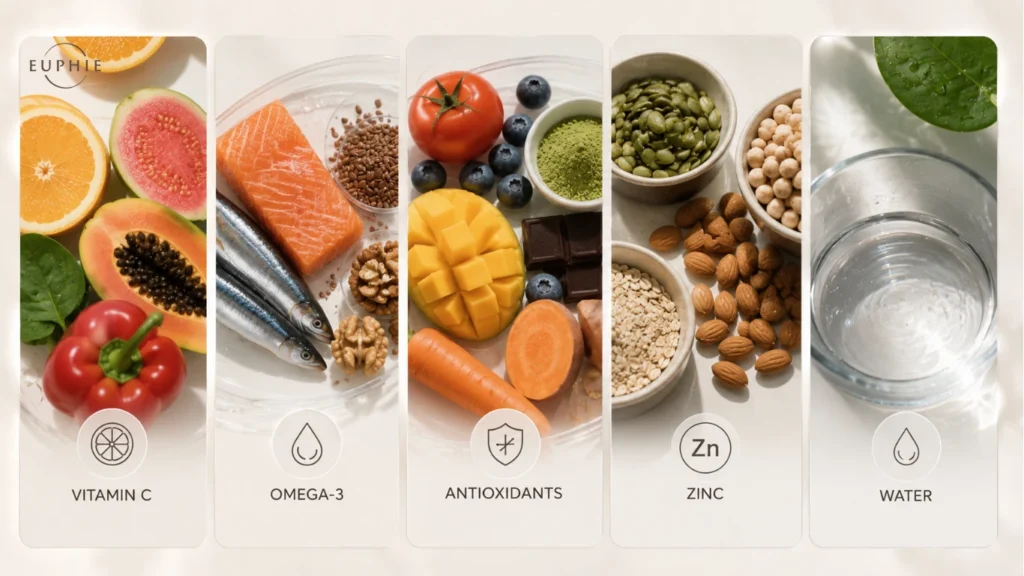
| Nutrient | Why Skin Needs It | Food Resources |
| Vitamin C | Essential for collagen synthesis and acts as a powerful antioxidant that helps protect skin from free radical damage caused by UV exposure, pollution, and oxidative stress | Citrus fruits, guava, papaya, bell peppers, leafy greens |
| Omega 3 Fatty Acids | Supports the skin’s lipid barrier, helping to retain moisture, reduce irritation, and improve repair. Research (including a 2025 meta analysis) suggests fatty acids may reduce wrinkle formation and support barrier integrity | Oily fish such as salmon and sardines, walnuts, flaxseeds |
| Antioxidants (Carotenoids and Polyphenols) | Carotenoids help protect against UV related oxidative damage and support an even skin tone. Polyphenols help reduce oxidative stress, which contributes to wrinkle formation and weakened barrier function | Carrots, tomatoes, mangoes, green tea, berries, dark chocolate |
| Zinc | Supports wound healing, collagen production, and regulates oil gland activity. Also has anti inflammatory properties that are helpful for acne prone skin | Pumpkin seeds, legumes, nuts, whole grains |
| Water | Supports internal hydration, nutrient delivery to skin cells, and tissue suppleness. Important for maintaining skin hydration especially in humid and air conditioned environments | Plain water, hydrating foods such as fruits and vegetables |

Excess sugar may affect the skin through a process called glycation, where sugar molecules bind to collagen and elastin fibres. Over time, this can make these fibres less flexible and more difficult to repair, contributing to visible signs of ageing such as loss of firmness, fine lines, and a dull-looking complexion. UV exposure may further speed up this process, which makes daily sun protection especially important in Malaysia’s sunny climate.
Reducing refined sugar intake can be a helpful long-term habit for supporting healthier, more resilient skin.
A diet high in processed foods, refined carbohydrates, and unhealthy fats may contribute to low-grade inflammation in the body. For the skin, this can affect the skin barrier, increase sensitivity, and make concerns such as acne, redness, and dullness more noticeable. Choosing more whole foods, vegetables, lean proteins, and healthy fats can help support the skin’s natural repair process and overall resilience.
Alcohol can dehydrate the body and may reduce certain nutrients that support healthy skin, such as zinc and B vitamins. When consumed frequently, it may contribute to skin that looks dull, puffy, uneven, or more easily irritated. Keeping alcohol intake moderate and staying well-hydrated can help support a healthier-looking complexion.
In Malaysia’s sunny climate, daily broad-spectrum sunscreen is one of the most important habits for protecting the skin from premature ageing, pigmentation, and long-term sun damage. A good diet and professional treatments can support the skin, but they cannot fully undo the effects of repeated unprotected sun exposure. Protection should always come first.
Sleep is when the body goes into repair mode. During quality sleep, the skin has time to recover from daily stress, environmental exposure, and inflammation. Consistently poor or insufficient sleep is directly reflected in the skin’s texture, tone, and the depth of fine lines over time.
Chronic stress can affect the skin by increasing cortisol levels, which may contribute to oiliness, breakouts, sensitivity, and slower skin recovery. Managing stress through rest, movement, breathing exercises, or simple lifestyle adjustments can support healthier skin from within.

A nutritious diet and healthy daily habits help create a better foundation for healthy-looking skin. However, some skin concerns may still need more targeted support than diet and lifestyle alone can provide.
Professional facial treatments at Euphie Skin Solutions are designed to complement your internal skin health with targeted formulations and advanced treatment technology. Together, lifestyle habits and professional skincare can support the skin from both inside and outside, helping to address concerns such as dehydration, dullness, congestion, sensitivity, and early signs of ageing.
Every recommendation begins with a proper skin assessment. Our skin expert will evaluate your skin’s condition, understand your concerns, and recommend the most appropriate treatment based on what your skin needs at the time of your visit.
Yes, a balanced diet can support healthier-looking skin. Nutrients such as vitamin C, omega-3 fatty acids, antioxidants, and zinc play important roles in collagen support, skin barrier function, inflammation balance, and skin recovery. However, diet alone may not fully resolve persistent skin concerns such as acne, pigmentation, dehydration, or sensitivity. It works best when combined with the right skincare routine and professional facial treatments.
Reducing refined sugar intake may help support long-term skin health. Excess sugar can contribute to a process called glycation, where sugar molecules affect collagen and elastin fibres. Over time, this may lead to reduced skin firmness, fine lines, and a dull-looking complexion. The effects are gradual, so consistency matters. A lower-sugar diet, together with sun protection and proper skincare, can help support healthier and more resilient skin.
Skin that is consistently inflamed, dehydrated, or nutritionally depleted from within will respond less well to external treatment alone. For better long-term results, professional facials should work together with healthy daily habits.
The best starting point is a skin consultation at Euphie Skin Solutions. Our skin experts will assess your skin condition, understand your lifestyle and concerns, and recommend the treatment that makes the most sense for where your skin is right now.
1Ng, J. Y., Ng, X. M. G. Y., Wong, Q. Y. A., & Chew, F. T. (2025). Dietary interventions in skin ageing: a systematic review and meta-analysis. Journal of PHYSIOLOGICAL ANTHROPOLOGY, 44(1), 26. https://doi.org/10.1186/s40101-025-00408-4