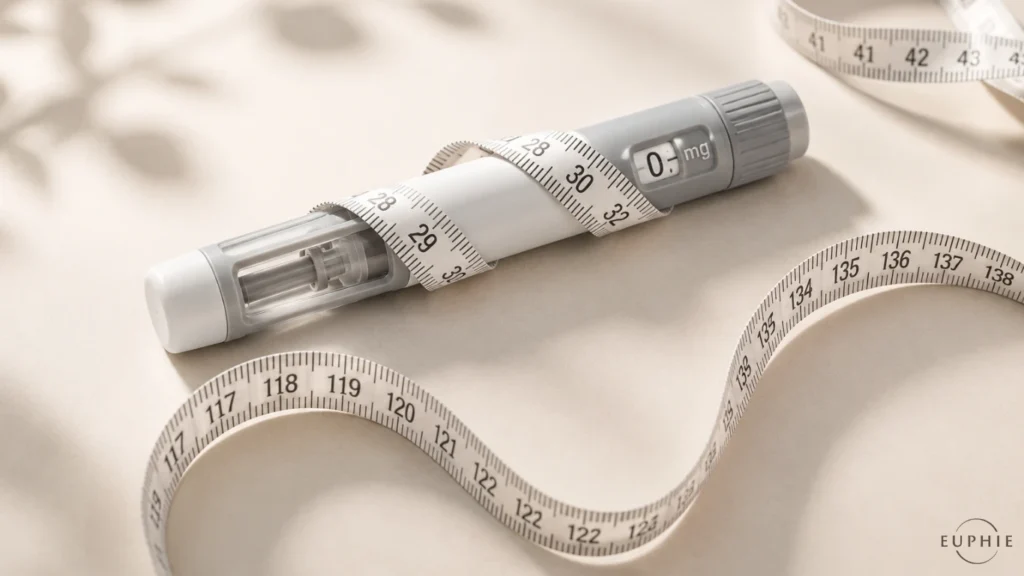
The Weight Loss Pen is a doctor-prescribed injection for weight loss. It comes as a small, pre-filled pen that you self-inject under the skin, usually into the abdomen, thigh, or upper arm. At Euphie, we offer four options: Wegovy, Ozempic, Mounjaro, and Saxenda. Your doctor will recommend the right one based on your health profile.
These are not diet pills or supplements. They are prescription-only medications with strong clinical backing, and every treatment is fully supervised by our doctors from consultation through to ongoing care.
In simple terms, the medication mimics a natural fullness hormone in your body. Here is what happens step by step:
Not all weight loss medications work the same way. Ozempic, Wegovy, and Saxenda act mainly on the GLP-1 receptor. Mounjaro acts on both GLP-1 and GIP receptors, which is one reason it tends to produce greater average weight loss in clinical studies.
Your doctor at Euphie will recommend the most appropriate option based on your health profile and goals.

At Euphie, we offer four doctor-prescribed weight management medications. Your doctor will determine which is most appropriate for you during your consultation.
Saxenda contains liraglutide and is the earliest GLP-1 medication approved specifically for weight management, with over a decade of clinical use. It is administered as a small daily injection and is a well-established option, particularly for patients who prefer a daily routine or are not yet suitable for once-weekly options.
Ozempic contains semaglutide and requires only one injection per week. Originally developed for type 2 diabetes management, it produces significant weight loss as a well-documented benefit and is widely prescribed for patients managing both weight and blood sugar concerns.Â
Wegovy contains the same active ingredient as Ozempic, semaglutide, but follows a higher dose escalation schedule developed specifically for chronic weight management rather than diabetes. It has received approval by Malaysia’s National Pharmaceutical Regulatory Agency (NPRA) as a prescription-only medication for chronic weight management, making it one of the most clinically validated weight loss options available in Malaysia today.
Mounjaro contains tirzepatide, the newest and most advanced option in this category. Unlike the others, it activates two hormonal pathways simultaneously, both GLP-1 and GIP, producing a stronger combined effect on appetite suppression, energy use, and blood sugar regulation. Clinical trials have shown it to produce the most significant average weight loss of any currently approved medication in this class.
| Active Ingredient | How Often | Average Weight Loss | |
| Saxenda | Liraglutide | Daily | 7 to 8% |
| Ozempic | Semaglutide | Once weekly | 10 to 15% |
| Wegovy | Semaglutide | Once weekly | Up to 15% |
| Mounjaro | Tirzepatide | Once weekly | Up to 20.9% |
Your doctor will recommend the most appropriate option based on your health profile during your consultation.
Weight loss pen treatment at Euphie Clinic may be appropriate for you if:
These medications are not appropriate for everyone and require a thorough medical assessment before prescription. Your doctor at Euphie will confirm your suitability during your consultation.
This depends on your individual health profile, medical history, weight loss goals, and whether you have any related conditions such as type 2 diabetes. Your doctor at Euphie will assess everything during your consultation and make a personalised recommendation. There is no single answer that suits everyone.
Results vary between individuals based on the medication prescribed, the dose, how consistently you follow the programme, and your lifestyle habits. On average, patients lose between 7% and 20% or more of their body weight. Your doctor will set realistic, personalised expectations during your consultation.
No. This is one of the most common misconceptions. These medications work specifically to reduce hunger and increase your sense of fullness. Most patients report that they feel satisfied with smaller meals and experience significantly fewer food cravings compared to before starting treatment.
The most common side effects are stomach-related and include nausea, loose stools, stomach discomfort, and constipation. These are most likely to occur at the start of treatment or after a dose increase, and typically improve as your body adjusts. Starting on a low dose and increasing gradually is the most effective way to minimise these effects. Your doctor will advise you on how to manage them if they occur.
These medications help reduce appetite and calorie intake, but they do not distinguish between fat and muscle when the body loses weight. Without adequate protein intake and resistance-based exercise, a portion of the weight lost can come from lean muscle mass rather than fat alone. Maintaining or building muscle is important not just for physical appearance but for long-term metabolic health. Muscle tissue burns more calories at rest, which means preserving it makes it easier to maintain your results over time. Your doctor at Euphie can guide you on how to approach nutrition and movement alongside your treatment for the best possible outcome.
The duration of treatment is determined by your doctor based on your progress and goals. These medications are designed for long-term use as part of an ongoing weight management programme. Stopping the medication typically leads to some weight regain over time, which is a natural physiological response rather than a failure of the treatment. Your doctor will discuss a sustainable long-term plan with you.
Yes, some options are particularly suitable for patients managing both weight and type 2 diabetes. Your doctor at Euphie will review your diabetes medications and overall health before making any prescription to ensure there are no interactions or contraindications.
These medications are not recommended for individuals who are pregnant or planning to become pregnant, breastfeeding, have a personal or family history of medullary thyroid carcinoma, have Multiple Endocrine Neoplasia syndrome type 2, have a history of pancreatitis, or have severe gastrointestinal conditions. A full medical consultation with our doctors at Euphie will confirm your suitability before any prescription is made.
Some weight regain is common after discontinuing these medications because they work by actively supporting your body’s fullness hormones. When you stop, those hormones return to their previous levels. This is not a failure of the medication. It is a known physiological response. Maintaining the healthy habits you build during treatment and speaking with your doctor about a long-term plan are the most effective ways to sustain your results.