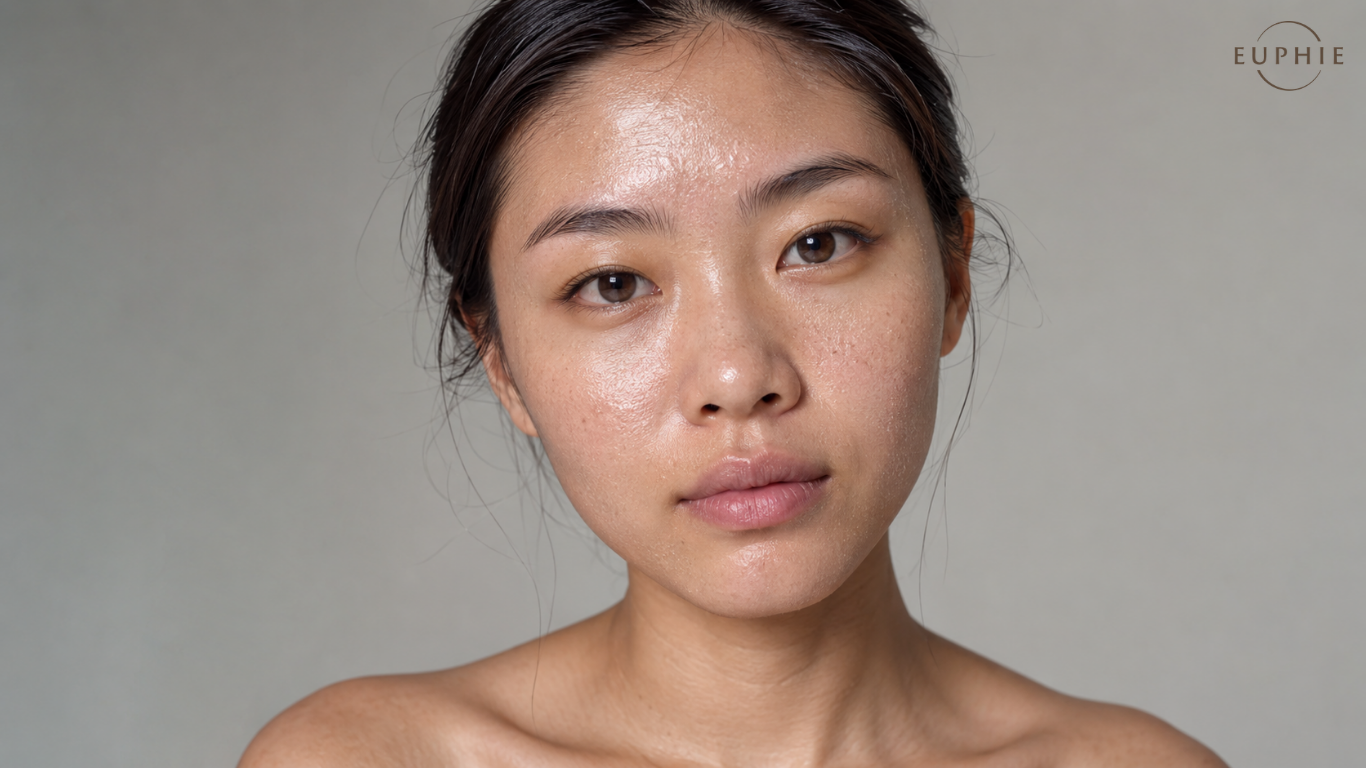
Oily skin is not always well-hydrated. Your skin can produce plenty of sebum and still lack water because oil and hydration are two different things.
So if your face turns shiny by lunchtime yet feels tight, looks dull, or stings when you apply skincare, you most likely have oily dehydrated skin. It is especially common in Malaysia, where humid outdoor air meets moisture-sapping air conditioning daily. Here is what is going on, and how to fix it without making the oiliness worse.
Dehydrated skin is skin that lacks water, not oil. It is a temporary condition, not a skin type, and can affect anyone, including people with very oily skin.
Sebum is the oil made by your skin. Hydration depends on water and a healthy skin barrier that helps keep it in. When the barrier is weakened, water escapes more easily. This is a process called transepidermal water loss.
The key point: sebum cannot replace water. If the barrier is leaking, your skin will dehydrate no matter how much oil it produces.
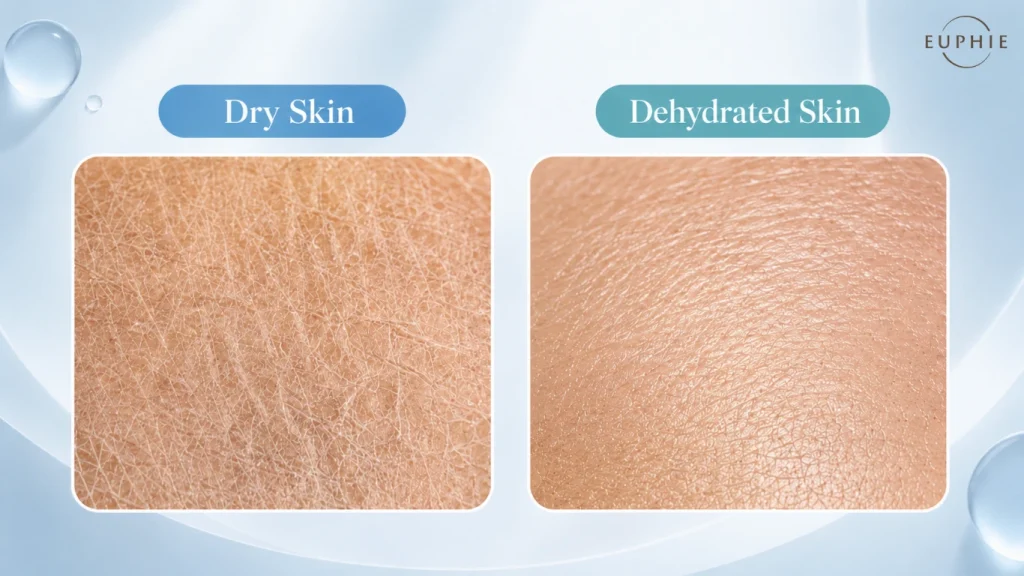
The short answer: dry skin lacks oil, while dehydrated skin lacks water. Dry skin is a skin type you are largely born with. Dehydrated skin is a temporary condition that any skin type can develop, including oily skin.
Because the two are so often confused, here is a side-by-side comparison to help you identify which one you are dealing with:
| Dry skin | Dehydrated skin | |
| What it lacks | Oil (sebum) | Water |
| Type or condition | Skin type, usually lifelong | Condition, temporary |
| How it feels | Rough, flaky, matte all over | Tight, especially after cleansing |
| How it looks | Dull, sometimes scaly | Dull, with fine crinkly lines |
| Can it be oily too? | No, oil production is low | Yes, very commonly |
| Main fix | Add oils and rich moisturisers | Add water and repair the barrier |
A simple at-home check: gently pinch the skin on your cheek. Dehydrated skin shows fine, tissue-paper lines and is slower to bounce back. If your skin feels rough and flaky year-round with no shine, it is likely dry rather than dehydrated.
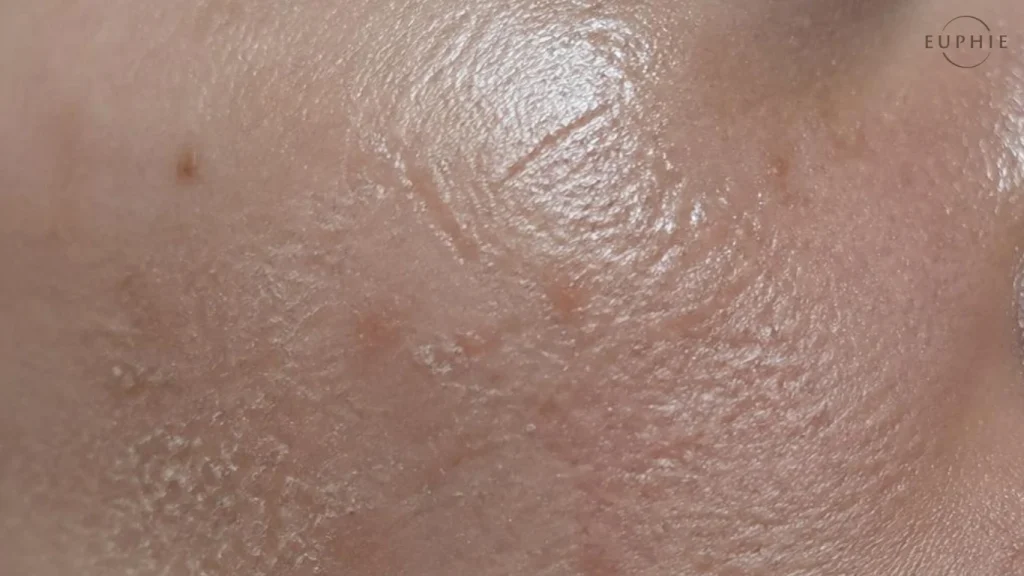
Oily dehydrated skin shows up as a contradiction. Your skin looks greasy but behaves like it is parched, and the clearest clue is shine and tightness at the same time.
Common signs include:
If several of these sound familiar, the problem is not too much oil. It is too little water.
Dehydration sets in when your skin loses water faster than it can replace it. For oily skin types, the routine itself is often the biggest offender.
The most common causes are:
Lifestyle factors. Low water intake, excess caffeine, poor sleep, and stress all deepen the deficit.
Over-cleansing and over-treating. Strong foaming cleansers, alcohol-based toners, daily clay masks, and stacked exfoliating acids can weaken the skin your skin barrier.
Skipping moisturiser. Avoiding it because you’re worried about shine can cause your skin to lose more moisture.
Environment. Air conditioning dehumidifies the air and quietly pulls water from your skin for hours at a time, while sun exposure and hot showers degrade the barrier further.
Fighting oil aggressively makes both problems worse. You notice the shine, so you wash harder and use stronger products. Those products damage the barrier, so more water escapes and dehydration deepens. Your skin senses the damage and protects itself the only way it can: by making even more oil. This is called rebound oiliness.
The fix is counterintuitive: stop attacking the oil and start replacing the water.
Treating oily dehydrated skin comes down to three steps: cleanse gently, add water back, and seal the barrier so it stays.
Here is how to put each step into practice:
Most people notice a difference within two to four weeks, and many find their skin becomes less oily once water levels normalise.
Depending on what your skin needs most, these Euphie Skin Solutions treatments fit well:
You do not need to pick the right one yourself. The best match depends on your skin’s condition on the day, which is exactly what an assessment is for.
Here are quick answers to the questions people ask most often about hydrating oily skin.
Yes. Hyaluronic acid is an oil-free, water-binding humectant, which makes it one of the best hydrating ingredients for oily skin. It adds water without adding shine or clogging pores. Apply it to slightly damp skin and layer a light moisturiser on top so the water it attracts stays locked in.
Hyaluronic acid itself is non-comedogenic and occurs naturally in the skin, so it is very unlikely to cause breakouts. If a product containing it seems to trigger pimples, other ingredients in the formula, such as rich oils or fragrance, are usually to blame.
Yes. Niacinamide helps regulate sebum production, strengthens the skin barrier, and reduces the appearance of enlarged pores. That combination makes it especially valuable for oily dehydrated skin, and it pairs well with hydrating ingredients like hyaluronic acid.
The clearest sign is shine and tightness at the same time: your skin turns oily through the day yet feels tight after cleansing. Other clues are a dull tone despite the oil, fine lines that look more obvious than usual, and products stinging when they never used to. A quick check is to gently pinch your cheek. If you see fine, tissue-paper lines, dehydration is likely.
Yes, and it is a smart pairing. Retinol can be drying and temporarily disruptive to the barrier, while hyaluronic acid replenishes water and eases that dryness. If you are prone to peeling or new to retinol, applying hyaluronic acid first, on slightly damp skin, then layering retinol on top can act as a buffer and reduce irritation. Either order works for most people, though. Finish with a moisturiser to lock everything in.