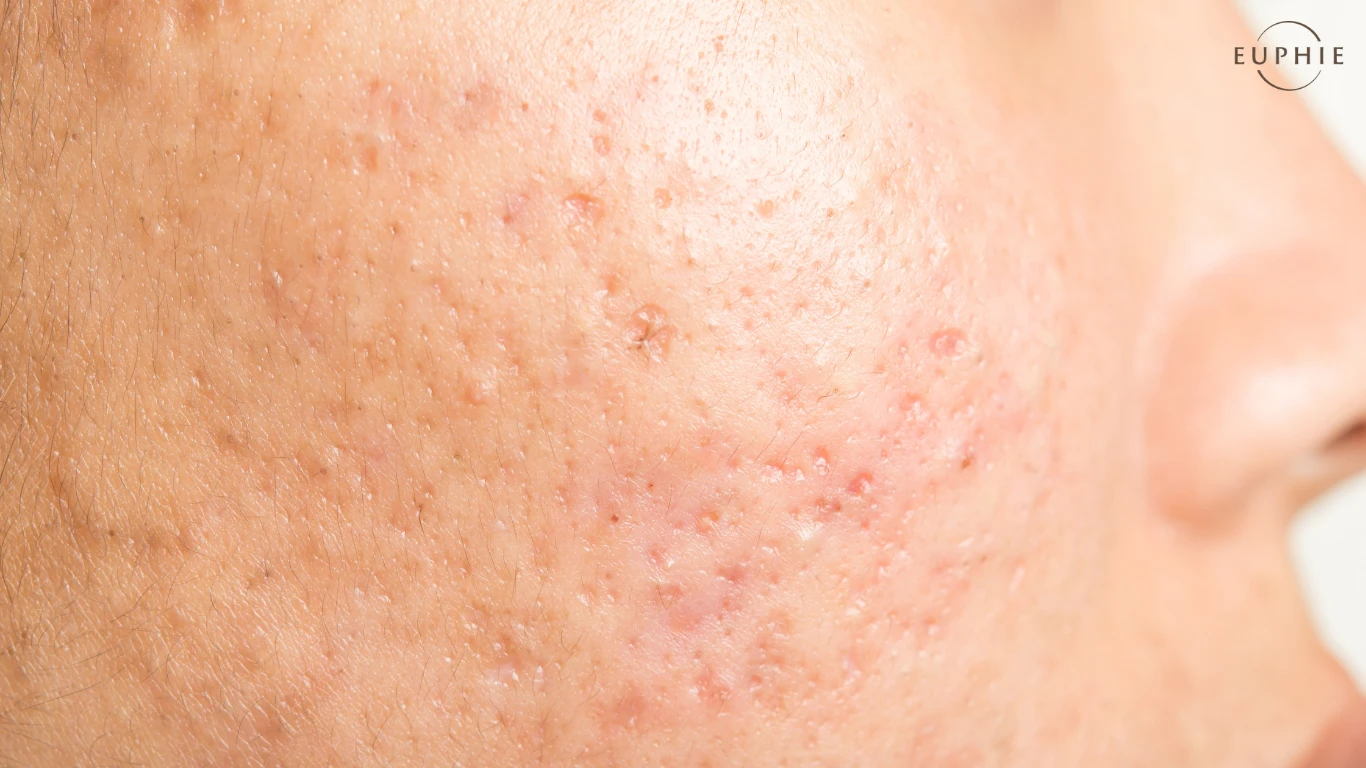
One of the most common requests our doctors hear at Euphie Clinic is this: “Can I start treating my acne scars now, even though I’m still breaking out?”
It is an understandable question. Acne scars are visible, frustrating, and affect how you feel about your skin every day. The urge to address them as soon as possible is completely natural. But starting scar treatment while active acne is still present is one of the most common reasons patients do not get the results they are hoping for.
This article explains why, and what the right sequence looks like.
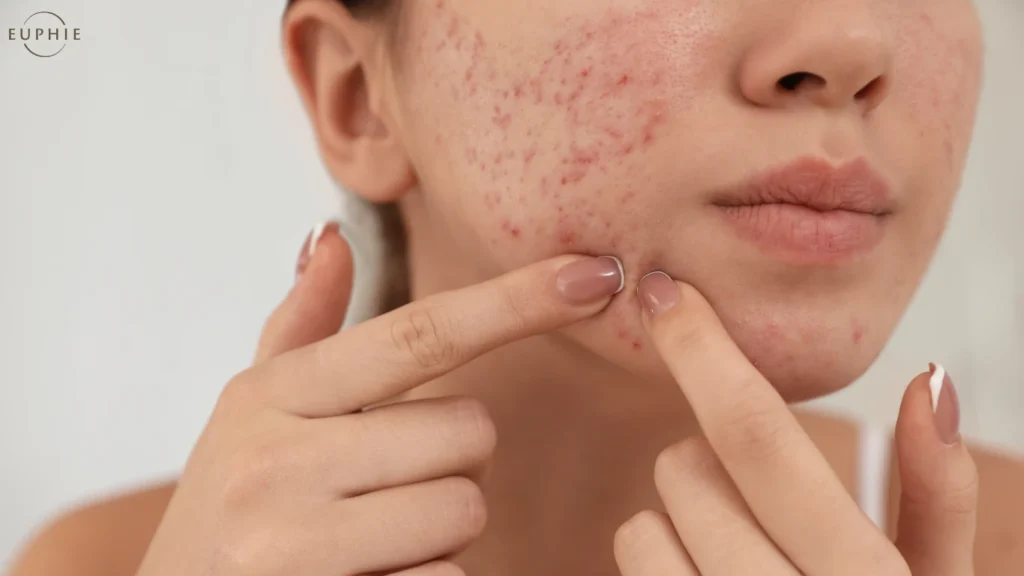
Before deciding on any treatment, it helps to understand what you are actually dealing with. Acne and acne scars are two distinct conditions that require two different approaches.
Find Out More : What Counts as Normal Hair Shedding?
Acne scars form as a result of damage to the skin’s collagen structure during a breakout. When a pimple becomes inflamed, the body triggers a repair response. In some cases, especially with deep or repeatedly aggravated breakouts, this repair process does not fully restore the skin to its original structure. The collagen that forms during healing is disorganised, insufficient, or laid down incorrectly, leaving behind depressions, pits, or textured marks on the skin surface.
The type of scar that forms depends on how the skin heals. Atrophic scars such as boxcar, rolling, and ice pick scars form when there is a net loss of collagen. These are the most common type associated with acne and the ones most patients want treated.
Inflammation is the central mechanism behind scar formation. The more severe and prolonged the inflammation during a breakout, the greater the damage to the surrounding collagen, and the higher the likelihood of scarring. This is also why repeated picking, squeezing, or inadequate acne management significantly worsens long-term scarring outcomes.
Controlling inflammation, which means controlling active acne, is therefore not just a preparatory step. It is fundamentally what determines how much scarring occurs in the first place.
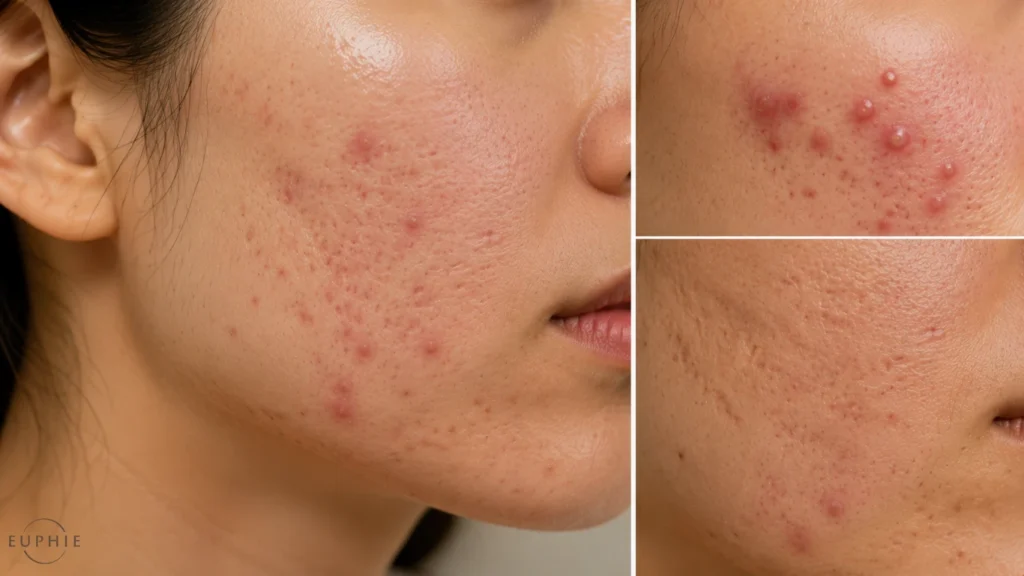
This is the most straightforward reason. If active acne is still present when scar treatment begins, new breakouts will continue to form new scars throughout the treatment course. You are, in effect, trying to repair damage while the same damage is still being created. The net result is that progress stalls, and patients are left feeling that the treatment is not working, when the real issue is the timing.
Scar treatments work by stimulating controlled collagen remodelling in the treated area. For this process to produce a clean, organised result, the skin needs to be in a stable state. Active breakouts create ongoing inflammation in the surrounding tissue, which disrupts the healing environment and interferes with how the skin responds to treatment. The collagen stimulated by scar treatment cannot lay down properly in tissue that is simultaneously inflamed by active acne.
Certain scar treatments, when applied to skin with active acne present, can actively worsen the situation. Laser resurfacing treatments, RF microneedling, and fractional treatments all create controlled injury to the skin to stimulate collagen production. In skin with active, inflamed lesions, this controlled injury can spread bacterial activity, aggravate existing inflammation, and increase the risk of post-treatment breakouts and further scarring. Applying these treatments to actively breaking-out skin is not just ineffective, it can make things worse.
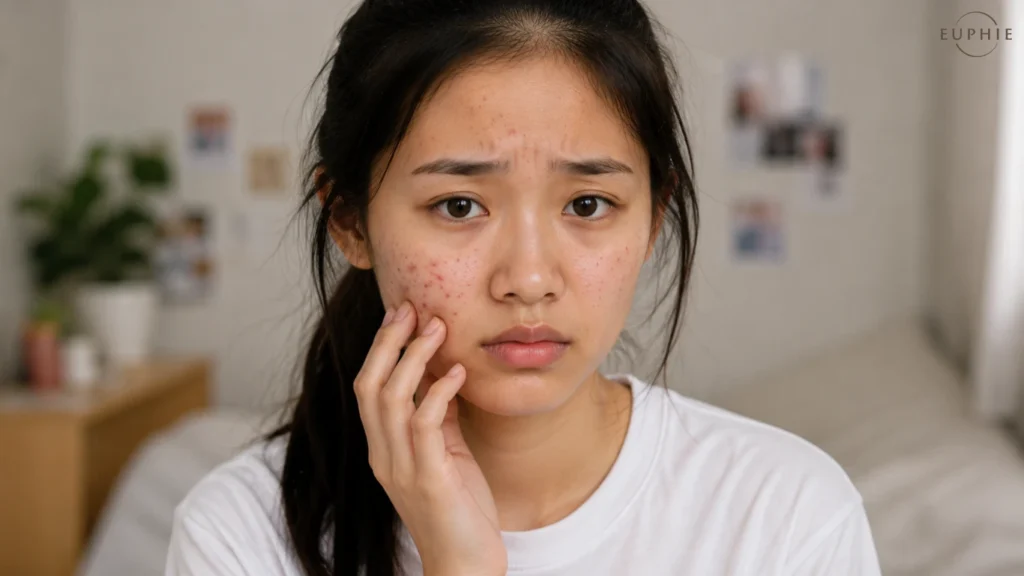
There is another reason this matters beyond just treatment sequencing, and it is one worth saying directly: the earlier active acne is properly managed, and the earlier scars are addressed, the better the outcome.
Acne in the teens and early twenties causes scarring that, if left untreated, becomes progressively more difficult to improve as the skin ages. Young skin has higher collagen turnover, stronger healing capacity, and greater elasticity, all of which mean scar treatments work better and produce more significant results in younger patients. Scar tissue that has been present for a decade is more established, more fibrous, and harder to remodel than scar tissue that is one to two years old.
View Related Article : You’re Slim, So Why Do You Still Have a Double Chin?
The same applies to active acne. Every uncontrolled breakout is a scar risk. Managing acne aggressively and early is not vanity. It is preserving the long-term quality and integrity of your skin.
If you are in your teens or twenties and dealing with active acne and early scarring, this is the best possible time to seek proper medical advice. Do not wait for it to get worse.
The foundation of any effective acne scar treatment plan is a stable, acne-controlled skin environment. This means working with a doctor to manage active breakouts using appropriate topical treatments, in-clinic procedures, or a combination of both, until the skin reaches a point where breakouts are minimal and infrequent.
This step is not optional. It is what makes everything that follows actually work.
Once active acne is under control, the flat dark marks left behind can begin to be addressed through brightening treatments and consistent daily sun protection. This prepares the skin further before structural scar treatment begins.
When the skin has been clear for a sufficient period, the focus can shift to the scars themselves, the depressed, textured changes to the skin structure that require collagen remodelling to improve. This is when scar revision treatments deliver their best results.

At Euphie Clinic, our doctors take a clinical approach to acne management tailored to each patient’s skin type, breakout pattern, and severity. Depending on your skin, this may involve prescription topical treatments or in-clinic procedures to bring active acne under consistent control.
The goal of this first phase is not just clearer skin day-to-day. It is creating the stable foundation that makes the scar treatment phase as effective as possible.
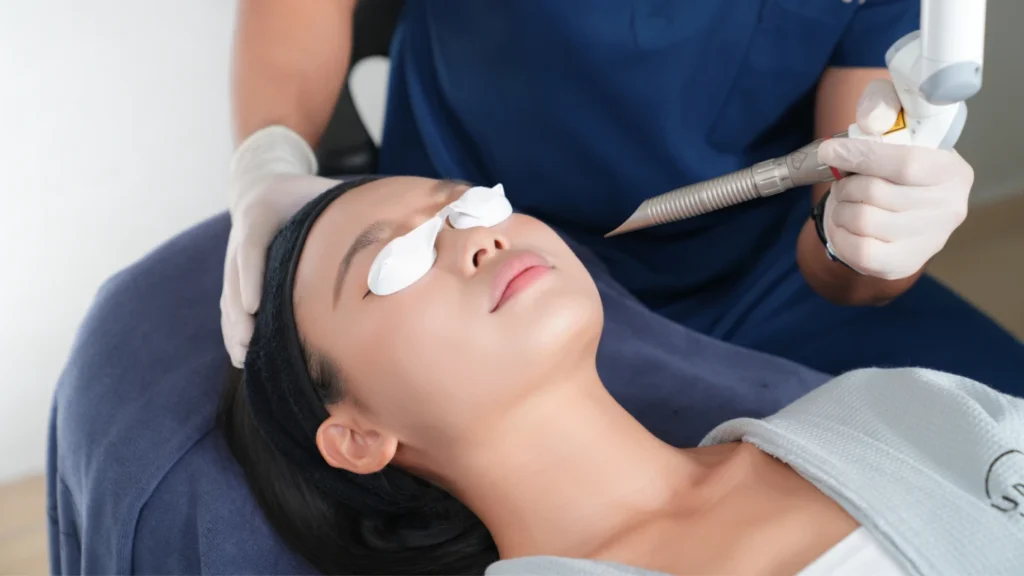
Once your skin is stable, our doctors will assess the type, depth, and distribution of your scars and recommend the most appropriate treatment approach. No two patients have the same scar pattern, and at Euphie Clinic, treatment is always selected and combined based on what your scars specifically need.
Laser Treatments
RF Microneedling
TCA CROSS
Subcision
There is no fixed universal timeline, but most doctors recommend that active acne be minimal and stable for at least two to three months before beginning scar treatment. This gives the skin enough time to settle, allows any recent breakout-related inflammation to fully resolve, and ensures the treatment environment is clean enough to produce the best possible results. Your doctor at Euphie Clinic will assess your skin and advise accordingly.
Some brightening treatments and daily sun protection can be introduced while acne is still being managed, as they do not carry the same risks as scar treatments. However, the most effective approach is still to bring active acne under meaningful control first, as new breakouts will continue to create new marks and undermine brightening progress. Your doctor will advise what is appropriate for your specific situation.
True atrophic acne scars, which involve a structural depression or texture change in the skin, do not resolve on their own. They require clinical treatment to stimulate collagen remodelling and improve their appearance. The earlier treatment is sought, the more improvement is typically achievable.
Euphie Clinic offers a comprehensive range of acne scar treatments including Fotona Scar Revision Laser, Fractional CO2 Laser, Sylfirm X 360, TCA CROSS, Subcision, PRP, Rejuran S, Plinest, diluted Radiesse, and dermal fillers where appropriate. The most suitable approach depends on your scar type, depth, and skin condition, and is determined during a consultation with our doctors.
Your doctor will guide this assessment, but generally, acne is considered sufficiently controlled when new breakouts are infrequent, mild, and not leaving significant new marks. It does not mean your skin needs to be completely clear before scar treatment can begin. It means the active inflammatory activity has been meaningfully reduced and stabilised. This is best determined in consultation with a doctor rather than self-assessed.