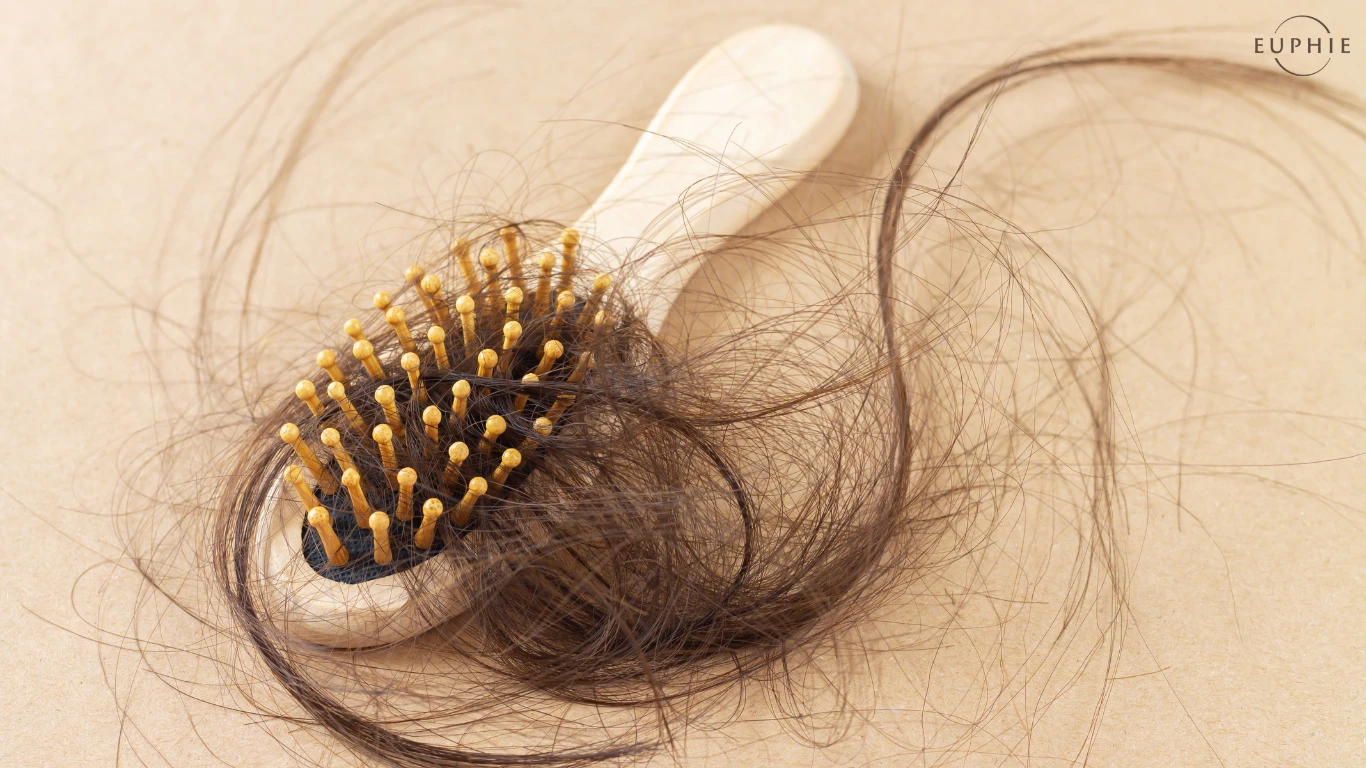
Noticing more hair on your pillow, in the shower drain, or between your fingers when you run a hand through your hair can be unsettling. For many people, the first reaction is to wonder whether something is seriously wrong, or to dismiss it and hope it passes.
The truth is that hair loss sits somewhere between the two. Some shedding is completely normal. Some are temporary and resolve on their own. But some require early medical attention, and knowing the difference sooner rather than later leads to meaningfully better outcomes.
The average person sheds between 50 and 100 strands of hair daily as part of the hair’s natural growth and renewal cycle. Hair grows in phases: a growth phase, a transitional phase, and a resting phase and shedding happens when hairs in the resting phase fall out to make way for new growth. This is not hair loss. It is the hair doing exactly what it is supposed to do.
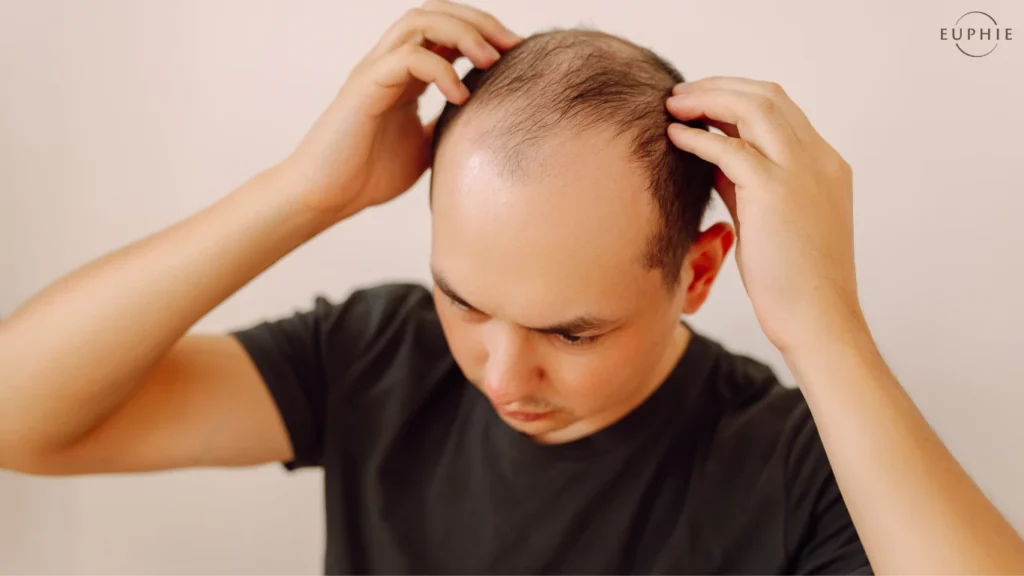
Shedding becomes a concern when the amount is noticeably more than usual and persists over several weeks, when you begin to see visible thinning at the crown or hairline, when the parting appears wider than it used to, or when you notice patchy areas where hair is significantly sparser. These are signals that something beyond the normal cycle may be happening. Clinical observations have suggested that around 30–50% of hair density in a given area may be lost before thinning becomes obvious to the naked eye. This highlights the importance of early evaluation, as hair follicles affected by prolonged miniaturisation may become progressively less responsive to treatment over time. Early intervention offers the best opportunity to preserve and restore hair density.
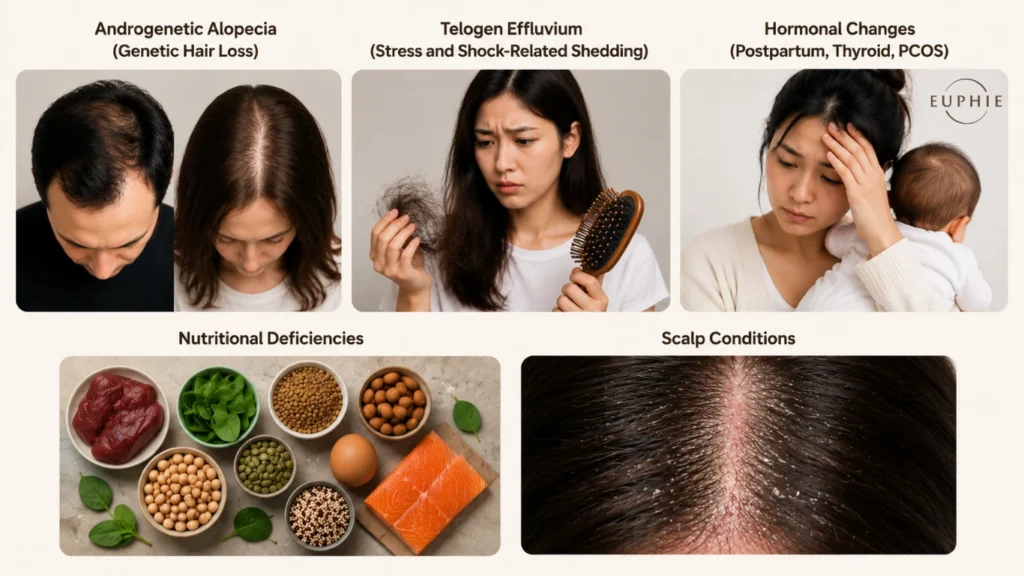
Androgenetic alopecia is the most common cause of hair loss in both men and women, and it is driven by a combination of genetics and hormonal sensitivity. In men, it typically presents as a receding hairline or thinning at the crown. In women, it more commonly presents as a widening part and general thinning across the top of the scalp rather than complete baldness.
Because it is a progressive condition, the earlier it is identified and addressed, the more can be done to slow its progression and preserve existing hair density.
Telogen effluvium is a form of temporary hair loss that occurs when a significant physical or emotional stressor pushes a large number of hair follicles into the resting phase at the same time. When those follicles shed simultaneously two to three months later, the loss can be alarming and sudden.
Common triggers include childbirth, illness, surgery, crash dieting, rapid weight loss, or a prolonged period of intense emotional stress. The good news is that telogen effluvium is usually temporary. Once the triggering stress resolves and the body stabilises, hair typically begins to regrow on its own. However, professional support can help speed recovery and ensure no underlying factor is being missed.
Related Reading : Medical-Grade Facials vs. Traditional Facials: What Your Skin Actually Needs
Hormonal fluctuations are a significant driver of hair loss, particularly in women. Postpartum hair loss, which occurs in the months following childbirth as oestrogen levels drop sharply, is one of the most common and distressing forms of hair shedding women experience. It is typically temporary, but the extent and duration vary considerably.
Thyroid imbalances, both underactive and overactive thyroid, can disrupt the hair growth cycle and lead to diffuse thinning. Polycystic ovary syndrome (PCOS) involves elevated androgen levels that can cause hair thinning similar to androgenetic alopecia. Both conditions require proper medical assessment and management.
The hair follicle is one of the most metabolically active structures in the body. It requires a consistent supply of nutrients including iron, zinc, biotin, vitamin D, and protein to function properly. When these are depleted, whether through poor diet, restrictive eating, or a health condition, hair quality declines and shedding increases.
Iron deficiency in particular is a leading and frequently overlooked cause of hair thinning in women in Malaysia, particularly among those with heavy menstrual cycles or low meat intake.
Conditions such as seborrhoeic dermatitis, scalp psoriasis, fungal infections, and folliculitis can disrupt the scalp environment and impair hair growth. An unhealthy scalp is a poor foundation for healthy hair. If hair loss is accompanied by persistent itching, flaking, redness, or tenderness on the scalp, a scalp-specific assessment is warranted.
While some hair loss resolves on its own, there are signs that prompt medical evaluation is worth pursuing:
The earlier a cause is identified, the more treatment options are available and the better the likely outcome.
At Euphie Clinic, our doctors take a thorough approach to hair loss assessment. This includes a detailed medical and lifestyle history, examination of the scalp and hair loss pattern, and where appropriate, bloodwork to assess for nutritional deficiencies, hormonal imbalances, or thyroid function. Understanding the cause is always the first step before any treatment is recommended.
Hair loss treatment is not one-size-fits-all. At Euphie Clinic, your doctor will recommend the most appropriate approach based on your diagnosis, the extent of your hair loss, and your goals.
Further Reading : Why Active Acne Must Be Controlled Before Treating Acne Scars
PRP (Platelet Rich Plasma) is a widely used non-surgical treatment for hair loss. It works by injecting concentrated growth factors from your own blood directly into the scalp, stimulating dormant follicles, improving blood circulation around them, and encouraging the growth of thicker, healthier hair strands.
Alongside PRP, Euphie Clinic also offers Iyashi Exosomes, an advanced treatment using pure bioactive synthetic exosomes developed in Japan. Exosomes are microscopic signalling particles that carry growth factors, cytokines, and regenerative proteins directly to the target cells, instructing them to repair, proliferate, and grow. When delivered into the scalp, they work to stimulate hair follicle activity, extend the hair’s active growth phase, and create a more favourable environment for sustained hair growth.
For patients who want a more comprehensive regenerative approach, PRP and exosomes can be used together, as the combination has shown superior outcomes to PRP alone in preliminary studies. Your doctor will advise whether one or both are appropriate for your specific condition.
The Fotona Hair Restore Laser uses the Er:YAG laser in a gentle, non-ablative mode to stimulate scalp circulation and encourage follicle activity from within the tissue. It works by improving the biological environment around each follicle, making it a suitable option for patients with early to moderate thinning and those who prefer a non-injectable approach. It is frequently combined with PRP or exosomes for enhanced results.
This depends on the underlying cause of the hair loss, which is why obtaining a proper diagnosis is important before a potentially temporary condition progresses to a stage that becomes more difficult to reverse.
For example, Telogen Effluvium, often triggered by physical or emotional stress, illness, or other physiological changes, is typically temporary and may resolve once the underlying cause has been addressed. In contrast, Androgenetic Alopecia is a progressive condition that can lead to permanent hair loss if left untreated, although its progression can often be slowed significantly with early intervention.
Our doctors at Euphie Clinic can assess your pattern of hair loss, identify potential contributing factors, and discuss appropriate management options during a consultation.
In many cases, yes, particularly when the cause is nutritional, hormonal, or stress-related and is caught early. For genetic hair loss, regrowth of fully lost hair is difficult, but preserving and strengthening existing hair is very achievable with the right treatment.
While many forms of hair loss are treatable, certain conditions can cause scarring of the scalp, resulting in permanent destruction of hair follicles and irreversible hair loss. This is another reason why early assessment is important, as timely diagnosis and treatment may help prevent further progression and preserve existing hair.
Androgenetic alopecia can begin as early as the late teens or early twenties, though it is more commonly noticed from the mid-twenties onwards. Hormonal and stress-related hair loss can occur at any age. There is no age that is too young to seek advice if the concern is affecting you.
All treatments can be performed with numbing to minimise discomfort, and most patients find them very manageable. The Fotona Hair Restore Laser and oral medication involves no injections and is generally comfortable with little to no downtime.
This depends on the treatment and the individual. Most patients notice early improvement after a few sessions, with more significant changes over three to six months as the hair growth cycle progresses. Your doctor will recommend a treatment plan tailored to your specific condition and goals during your consultation.