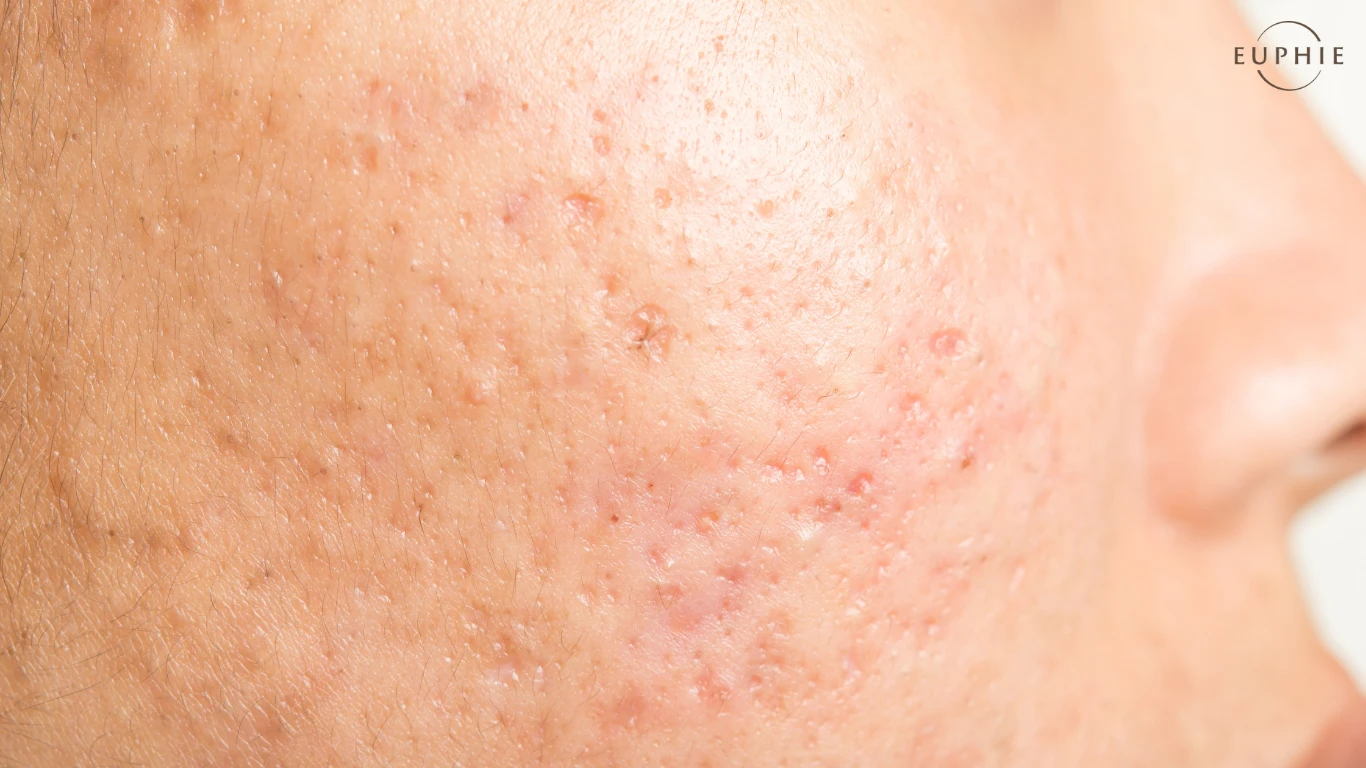
You did everything right. You stuck to your routine, resisted the urge to pick (mostly), and the breakouts finally stopped. But instead of clear skin, you’re looking at dark spots, red patches, or small dents that don’t seem to be going anywhere.
You’re not alone. It’s one of the most common questions we hear from students and young adults at Euphie Clinic.
Here’s the short answer: clearing acne and clearing acne marks are two separate processes. Acne treatments stop new pimples, but they don’t erase what each pimple leaves behind. Those marks fade on their own timeline, and some types won’t fade without help.
The most important step is figuring out which type of mark you have, because each one behaves differently and needs different treatment.
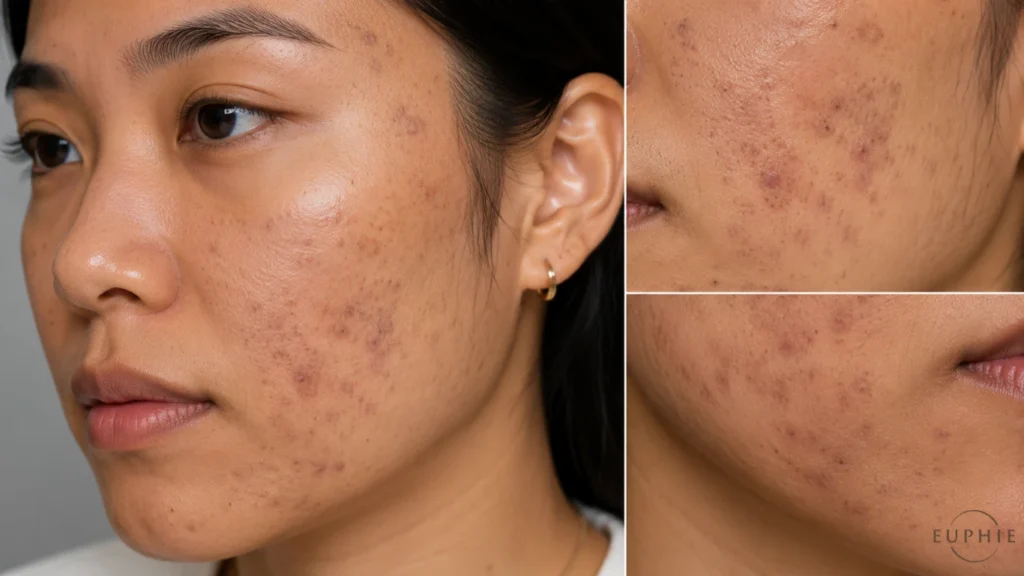
When skin is inflamed, pigment cells go into overdrive and leave a flat brown, grey, or dark patch where the pimple used to be. This is called post-inflammatory hyperpigmentation (PIH).
PIH is extremely common in Malaysian and other Asian skin tones, which naturally produce more pigment in response to inflammation. The good news: PIH is not a scar. Your skin texture is completely normal, only the colour has changed. It fades on its own, but slowly, and sun exposure keeps “topping up” the pigment. That’s why marks that should fade in months can linger for a year or more.
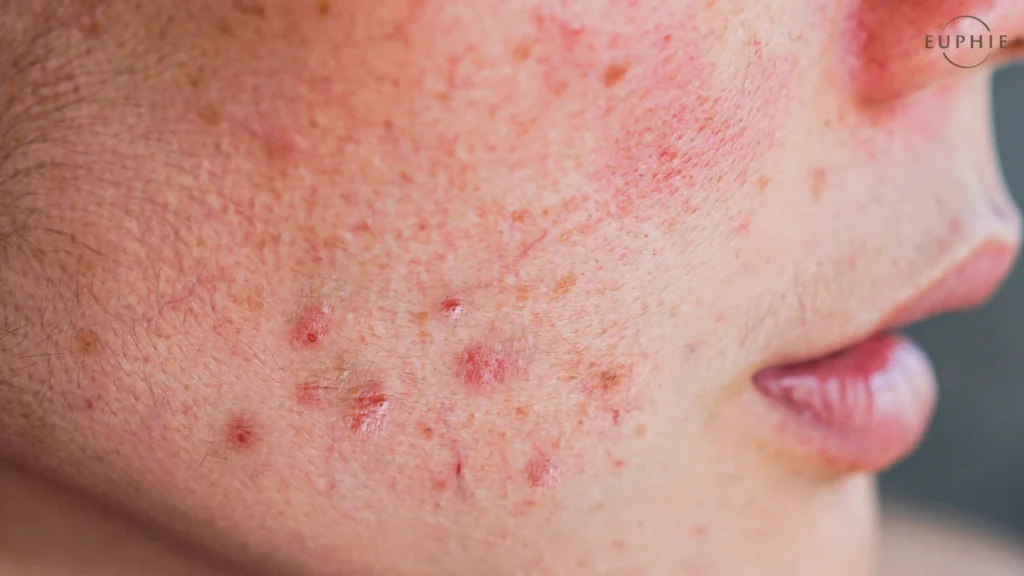
If your marks look red, pink, or purplish rather than brown, they’re most likely post-inflammatory erythema (PIE). These aren’t pigment at all. They’re tiny dilated blood vessels left over from the inflammation.
A simple home test: press a clear spoon or glass against the mark. If it fades under pressure, it’s PIE.
PIE is more common in fairer skin and often gets mistaken for scarring. Like PIH, it’s flat and temporary, but because it’s caused by blood vessels rather than pigment, brightening creams do very little for it.
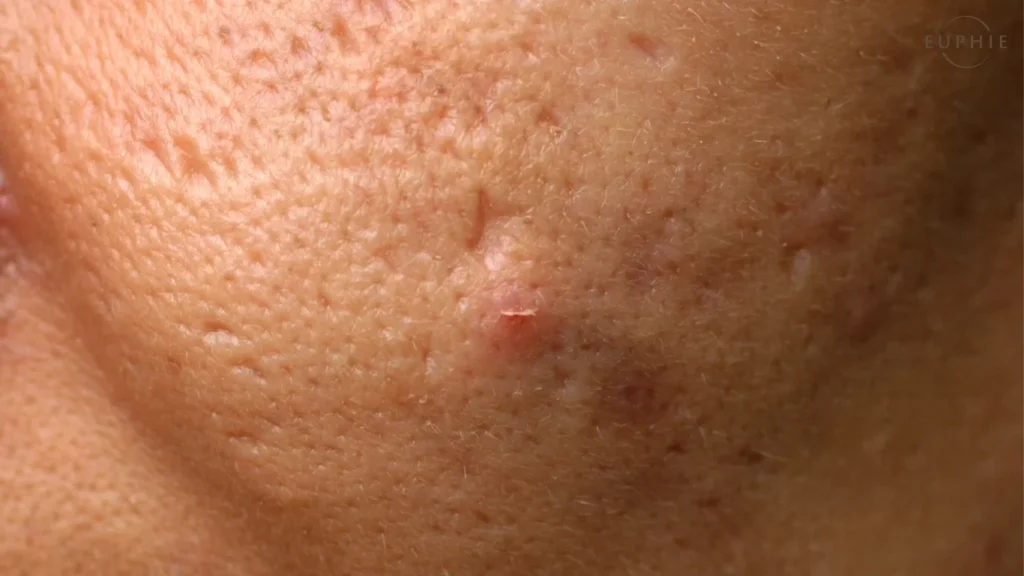
If you run a finger over your skin and feel dents, pits, or raised bumps, that’s a true scar. The inflammation went deep enough to damage collagen in the skin’s support structure. Common types include ice pick scars (narrow, deep pits), boxcar scars (broader dents with defined edges), rolling scars (wave-like unevenness), and raised keloid scars.
Here’s the crucial difference: flat colour changes (PIH and PIE) can fade on their own. Textural scars do not. No cream, serum, or amount of waiting will rebuild lost collagen. That requires clinical treatment.
Deep, slow-simmering inflammation, especially from cystic or hormonal acne, can leave bumps that look like marks but are actually still-active pimples. If a “mark” is raised, tender, or occasionally flares up, it may need continued acne treatment first.
Not sure which one you’re looking at? This table sums up the key differences at a glance, so you can match your marks to the right column before choosing a treatment.
| PIH (dark marks) | PIE (red marks) | True scars | |
| Appearance | Flat brown/grey spots | Flat red/pink patches | Pits, dents, or raised bumps |
| Cause | Excess pigment | Dilated blood vessels | Collagen damage |
| Texture | Smooth | Smooth | Uneven |
| Fades on its own? | Yes, over months to years | Yes, over months to years | No |
| Worsened by | Sun exposure, picking | Heat, irritation, picking | Untreated inflammation |
With daily sun protection and no new breakouts, mild PIH typically fades in 3 to 6 months. Deeper or older pigmentation can take 1 to 2 years. PIE follows a similar timeline. Without sunscreen, both can last far longer. Malaysia’s year-round UV means unprotected marks are constantly being reinforced.
True scars don’t fade with time. Their appearance may soften slightly, but the texture change is permanent unless treated.
And anything promising to “remove acne scars naturally in a week” isn’t being honest with you. Skin renewal alone takes about a month per cycle, and meaningful fading takes several cycles.
For flat marks (PIH and PIE), consistent home care genuinely helps:
Notice what’s missing from this list: anything that fixes texture. Home care can improve colour, but it cannot fill a pit or flatten a raised scar.
If your marks are stubborn, widespread, or textural, professional treatment can dramatically shorten the journey. At Euphie Clinic, treatment is matched to your mark type:
For dark marks (PIH):
For red marks (PIE):
For true scars:
Most people have a mix of mark types, so the best results usually come from a combination plan. That’s why a proper skin assessment comes first. What looks like a scar is often just PIH that needs a simpler, more affordable treatment, while what looks like a stain is sometimes early scarring that’s better treated sooner rather than later.
Flat dark marks (PIH) and red marks (PIE) usually fade within 3 to 24 months if you protect your skin from the sun and avoid picking. True scars (pits, dents, or raised bumps) do not fade on their own and need clinical treatment.
Marks are flat colour changes with normal texture. Scars are texture changes caused by collagen damage. A simple rule: if you can feel it with your fingertip, it’s a scar. If you can only see it, it’s a mark.
Mild pigmentation typically fades in 3 to 6 months with daily sunscreen. Deeper or older marks can take 1 to 2 years. Clinical treatments like pico laser or chemical peels can significantly shorten this.
Darker marks usually mean deeper or longer inflammation (like cystic pimples or repeated picking), or ongoing sun exposure that keeps stimulating pigment. Asian skin tones are also naturally more prone to hyperpigmentation.
No. Acne treatments prevent new breakouts but don’t fade existing marks. For dark marks, you need sunscreen plus ingredients like niacinamide, vitamin C, azelaic acid, or retinoids, or clinical treatments for faster results.
No, and be wary of anything that claims otherwise. Skin renewal takes roughly a month per cycle, and fading takes several cycles. True scars can’t be removed by any natural remedy. They need professional treatment such as microneedling, or laser resurfacing.
See a doctor if your marks haven’t improved after 3 to 6 months of sunscreen and consistent skincare, if you notice texture changes, or if some “marks” are still tender or flaring, which may mean your acne isn’t fully controlled yet. Treating active inflammation early is also the best way to prevent new scars.