Struggling with acne and worried about scars? PRP (platelet-rich plasma) treatment offers a minimally invasive option that uses your own blood to help your skin heal. But how does it actually work, and is it right for your acne?
This guide explains what PRP is, how it helps acne-prone skin, realistic expectations, and whether it’s worth trying.
PRP stands for platelet-rich plasma. It’s made from your own blood and contains growth factors that trigger healing.
Here’s the process: Your doctor draws a small amount of blood, spins it in a centrifuge to separate the platelets, and injects the concentrated plasma directly into acne-prone areas.
PRP’s growth factors stimulate collagen production and support the skin’s natural healing process. This may help improve skin texture and support recovery after acne. Depending on acne severity, other treatments, including antibiotics, may also be needed as part of a personalised treatment plan.
PRP doesn’t work like antibiotics (which kill bacteria) or retinoids (which increase cell turnover and reduce oil/sebum production). Instead, PRP works on healing by reducing inflammation and stimulating collagen production.
Think of it this way. Antibiotics treat the infection. Retinoids help prevent breakouts. PRP helps your skin repair itself after acne heals.
It’s best used to support the skin’s healing process and reduce the risk of acne scarring.
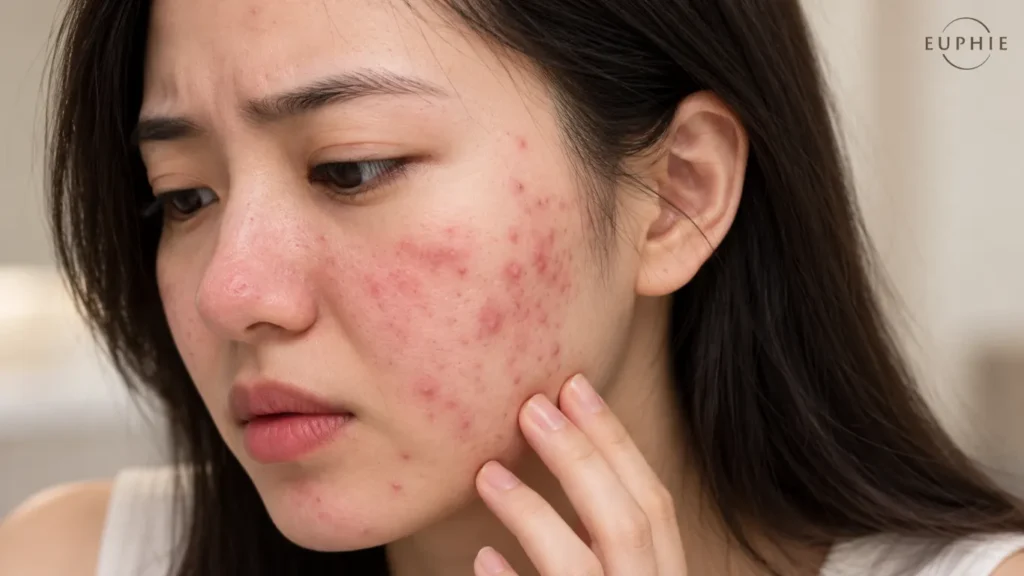
PRP alone may not clear active breakouts. If you’re actively breaking out, you may need active acne treatments such as antibiotics, retinoids, or other medications alongside PRP. PRP may help support the skin’s healing process while addressing active acne, depending on your skin condition and your doctor’s assessment.
Once active acne is controlled, PRP also helps prevent future breakouts by improving skin quality and reducing inflammation.
Yes. PRP works best if done during the healing phase, before scars become permanent.
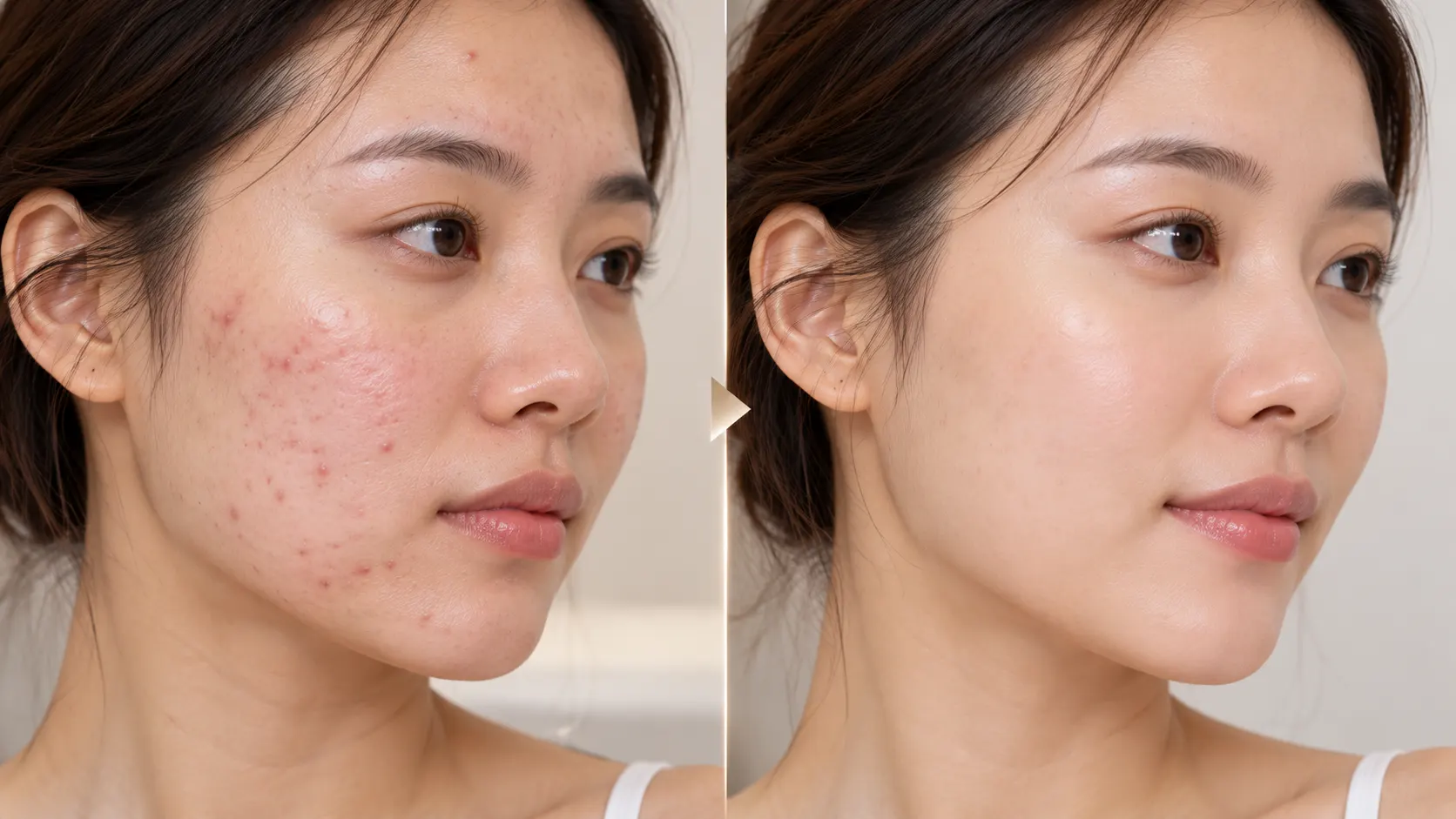
When acne heals, it can leave indented scars (atrophic scars). PRP stimulates collagen production, which helps fill these scars naturally.
Even if scars are already there, PRP can improve skin texture and make scars less noticeable. The earlier you start PRP, the better the results.
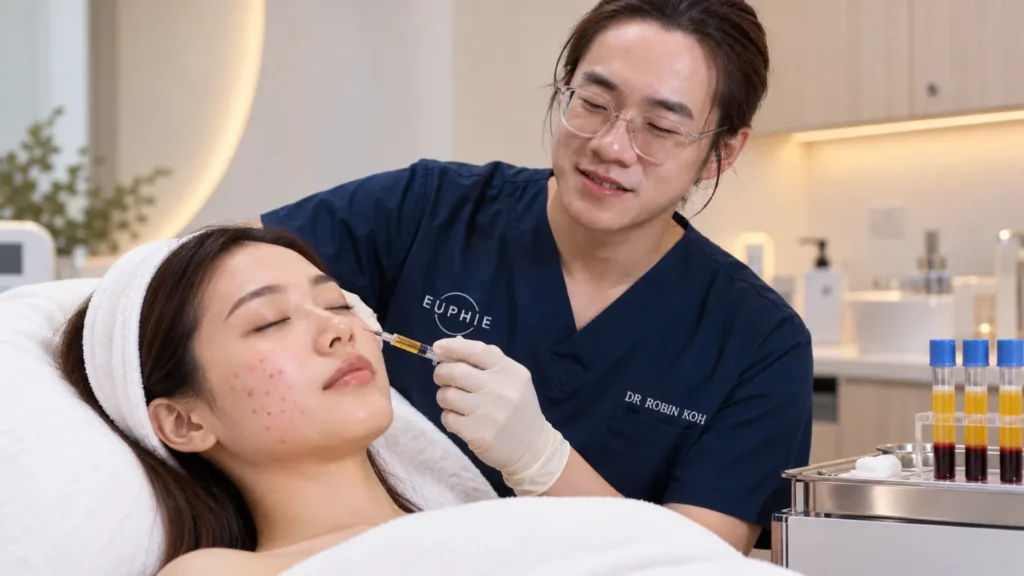
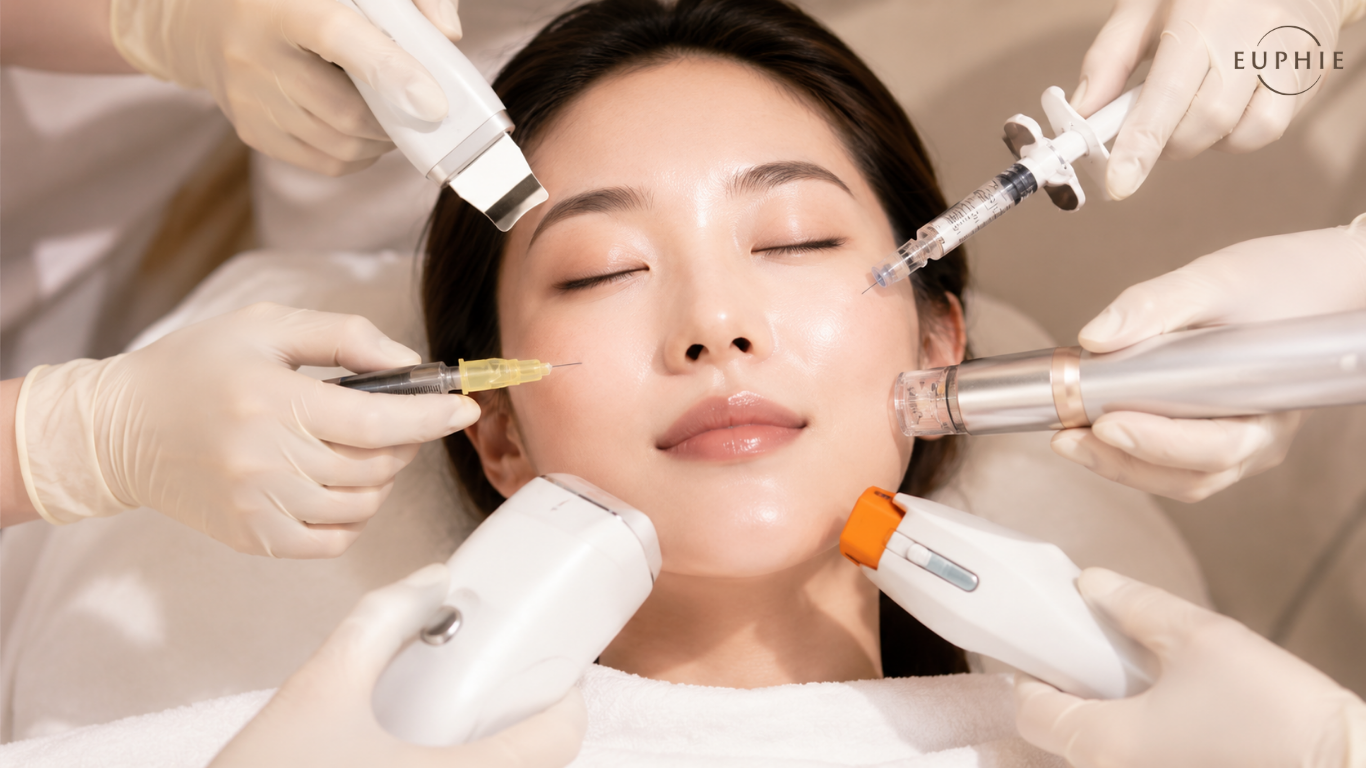
PRP treatment takes 30 to 45 minutes. Your doctor draws a small amount of blood, spins it in a centrifuge to separate the platelets, then injects the concentrated plasma into acne-prone areas or scar sites.
The injections feel like tiny pinches. Most people describe it as mild discomfort or a prickling sensation rather than pain. Your doctor will apply numbing cream beforehand.
Minimal downtime. You can return to normal activities immediately. Mild redness or swelling may appear for 1 to 2 hours and resolve quickly. Avoid direct sun, intense exercise, and hot showers for 24 hours.
Results timeline: Week 2 to 3: improved skin texture and reduced inflammation. Week 4 to 8: collagen production increases and scars become less noticeable. Week 8 to 12: full results become visible.
Most people need 3 to 4 sessions for noticeable results, spaced 2 to 4 weeks apart.
After your initial series, maintenance sessions every 3 to 6 months help sustain results.
The exact number depends on your acne severity, scar depth, and how your skin responds. Your doctor will recommend a personalized plan during consultation.
Yes. PRP uses your own blood, so there’s no risk of allergic reaction or rejection.
Infection risk is low when performed by a trained doctor in a clean clinic using sterile technique.
Side effects are minimal: mild redness (resolves within hours), slight swelling (resolves within 24 hours), pinpoint bruises (rare, fades within days), temporary sensitivity to touch.
Who should avoid PRP: People with active infections, those on blood thinners, pregnant women, or people with very low platelet counts should consult their doctor first.
Want to know more? Learn everything about PRP safety before your first treatment.
PRP vs Microneedling: Microneedling creates controlled injury to trigger collagen. Studies show PRP combined with microneedling outperforms either treatment alone, making it a preferred combination approach.
PRP vs CO2 Laser: CO2 laser works faster but requires more recovery time. PRP is gentler with less downtime but takes longer to show results.
PRP vs Rejuran: Both stimulate healing. Rejuran uses salmon DNA. PRP uses your own blood’s growth factors. Results are similar, but PRP has less reaction risk.
Combination approach: Research shows combining PRP with microneedling or laser often outperforms single treatments.
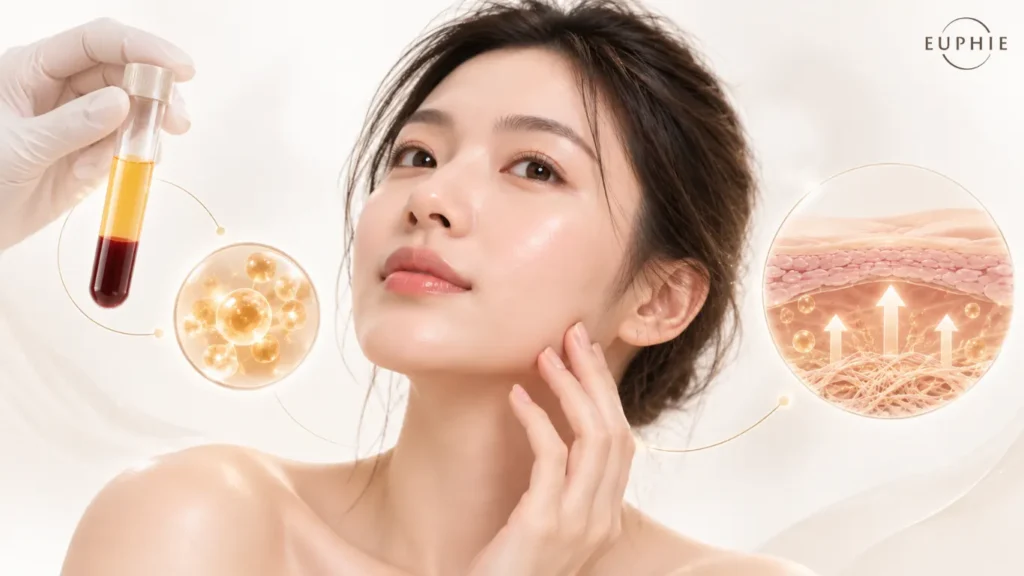
PRP is minimally invasive with low downtime. If you want to avoid more aggressive treatments, PRP is worth considering. Results are more gradual, but safety is high.
PRP is for all phases. It helps active acne recover faster, reduces the risk of it turning into acne scars, hastens recovery of acne marks, improves the skin barrier to reduce new breakouts, and also treats formed atrophic acne scars.
Yes. PRP may help improve acne scars by stimulating collagen production and improving skin texture. However, acne scars can be challenging to treat, and the best results may be achieved by combining PRP with other suitable treatments, such as microneedling or laser treatments, depending on the type and severity of the scars.
Possibly, but results are usually subtle. Most people see meaningful improvement after 2 to 3 sessions. Full results take 8 to 12 weeks.
Yes. Three sessions often produce good results. Most studies show better results with 3 to 4 sessions.
Yes, improvements in acne marks and atrophic acne scars can be long-lasting. PRP stimulates collagen production and supports the skin’s natural healing process, helping improve skin texture over time. Unlike fillers, which typically last around 6–12 months, improvements from collagen stimulation can be sustained long-term, although results vary from person to person.
No. Severe scars cannot be completely erased. But PRP can make scars 50 to 70% less noticeable and significantly improve skin texture.
Results typically last 12 to 18 months. Maintenance sessions every 3 to 6 months help sustain improvements.
Microneedling creates controlled injury to trigger collagen. Combining PRP with microneedling often gives better results than either alone.
CO2 laser works faster but requires more recovery time. PRP is gentler with less downtime but takes longer to show results.
Most people describe it as mild discomfort or a prickling sensation, not pain. Your doctor will apply numbing cream beforehand.
People with active infections, those on blood thinners, pregnant women, and people with very low platelet counts should consult their doctor first.
Results are gradual, not immediate. You need multiple sessions spaced weeks apart. Very deep scars may not respond fully. Choosing an experienced doctor minimizes risks.