HIFU Treatment: The Non-Surgical Lift That Actually Goes Deep Enough to Work

Beneath the skin is a deep layer that surgeons usually tighten during a facelift to lift and firm the face. For years, surgery was the only way to reach it.

HIFU changed that.

High-Intensity Focused Ultrasound, or HIFU, is a non-surgical treatment that can safely reach this deep foundation without any cuts. At Euphie Clinic, we use the Ultracel Q+ device to send precise ultrasound energy into the skin, encouraging the body to naturally rebuild collagen from within.

No surgery. No needles. No downtime.

So What Exactly Is HIFU and How Is It Different From Other Lifting Treatments?

HIFU uses focused ultrasound energy to create gentle, controlled heat deep under the skin. Unlike lasers or radiofrequency, which mainly work on the surface, HIFU reaches the deeper layers where real lifting and firming happen.

Think of it like using a magnifying glass to focus sunlight on a single spot. The surrounding skin stays completely untouched while the targeted area gets a precise burst of energy that encourages the body to naturally repair and strengthen itself.

This process creates tiny, controlled heat points deep in the skin, all the way down to the layer that acts as the foundation of the face. These points gradually tighten the skin by helping collagen fibres shrink and rebuild.

This deep foundation is important because when it weakens with age, areas above it, such as the cheeks, jawline, and jowls, start to sag. Strengthening it gives a real, noticeable lift and not just a temporary surface tightening.
The Science of What Happens Beneath Your Skin During HIFU

How HIFU Lifts from Within

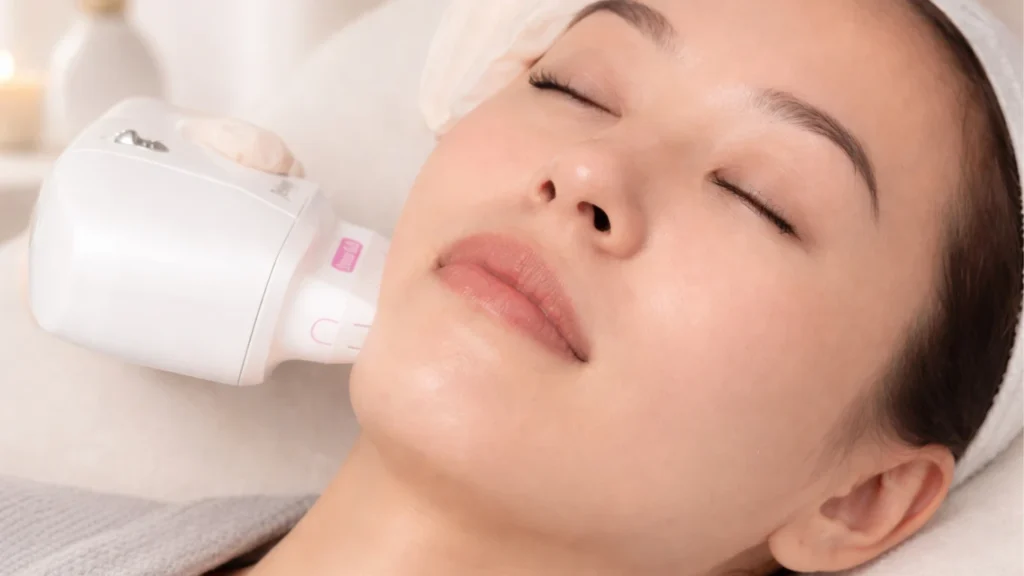
When the HIFU device is applied, it sends energy deep into the skin where the real lifting happens. This encourages the body to naturally rebuild collagen, gradually tightening and firming the skin. The outer layer of the skin stays completely unharmed, so there is no downtime.

Right after treatment, some patients notice a subtle initial tightening as the existing collagen fibres shrink slightly. Over the next 2 to 3 months, the body produces new collagen and elastin, the proteins that help keep skin firm and smooth. This natural rebuilding process is what creates a deeper and more noticeable lift over time.

What the Ultracel Q+ Targets at Euphie

The Ultracel Q+ device used at Euphie operates with cartridges set at different focal depths, allowing the treating doctor to target specific layers of the skin precisely:

  • 1.5 mm depth: Targets the superficial dermis for skin texture and surface refinement
  • 2.0 mm depth: Addresses the mid-dermis for collagen density and skin firmness
  • 3.0 mm depth: Reaches the deep dermis for structural tightening
  • 4.5 mm depth: Targets the SMAS layer, the same tissue addressed in a surgical facelift, for genuine lifting of the lower face, cheeks, and neck
  • 6 mm depth: Melts fat at the jawline
  • 9–13 mm depth: Targets body areas for contouring

Each session at Euphie is customised. Doctors will select the combination of depths based on your individual skin condition, anatomy, and goals.
What Can HIFU Actually Treat? A Realistic Breakdown

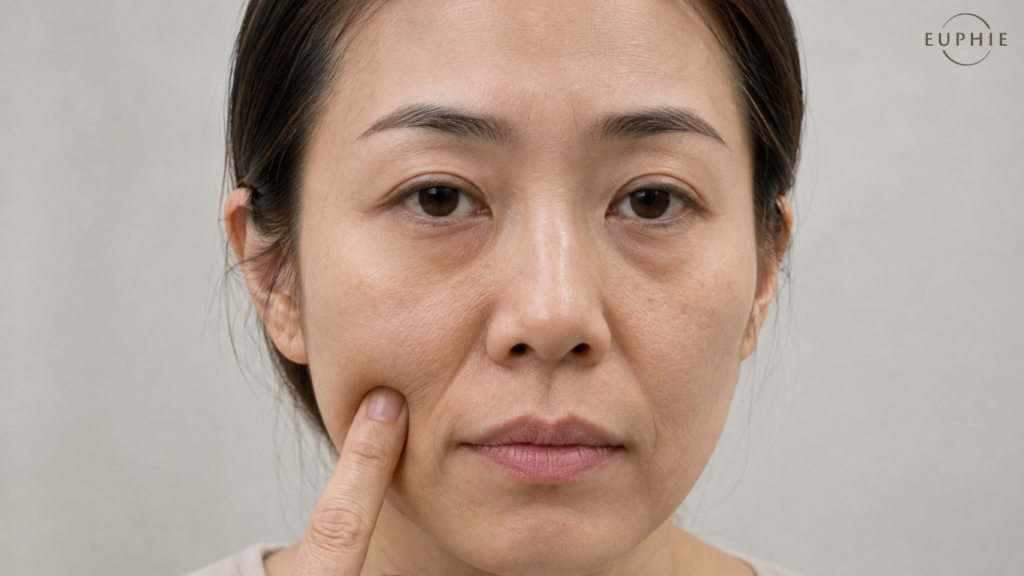
Sagging Skin on the Face and Neck

Clinical evidence shows HIFU demonstrated significant efficacy in skin tightening, particularly in the lower face, neck, and eyes, with improvements in skin laxity ranging from 18 to 30 percent. For patients with mild to moderate skin laxity, this translates to a noticeably lifted, more defined appearance. Areas commonly treated at Euphie include:

  • Sagging or loose skin around the cheeks and the middle of the face
  • A more defined jawline and less sagging along the jaw
  • Tightening and lifting the skin under the chin and on the neck
  • Brow lifting and forehead firmness
  • Nasolabial folds (smile lines)

View more : What Is Sylfirm X and What Can It Actually Fix?

Double Chin and Facial Contouring

Beyond lifting, the Ultracel Q+ can target the subcutaneous fat layer beneath the chin and along the jawline. By delivering HIFU energy to the fat tissue, it triggers a reduction in localised fat volume, helping to define the jaw and slim the lower face without any injections or surgery.

Fine Lines and Wrinkles

As the new collagen builds over the weeks following treatment, the skin surface also benefits. Fine lines become less pronounced, skin texture improves, and the overall complexion takes on a firmer, smoother quality.

HIFU vs Other Treatments: Understanding Where It Fits

People often ask how HIFU compares to other lifting treatments available at Euphie. Here is a straightforward breakdown:

  • HIFU vs Lasers
    Lasers work on the skin’s surface, improving texture, pigmentation, and shallow layers. HIFU works deeper to lift and firm the face. The two can be combined for more complete results.
  • HIFU vs Radiofrequency (RF)
    RF treatments mainly warm the upper and middle layers of the skin to improve firmness and texture. HIFU reaches much deeper layers, giving a more noticeable lifting effect.
  • HIFU vs Sylfirm X
    Sylfirm X focuses on redness, pigmentation, and overall skin quality. HIFU targets deeper layers for lifting and firming. Many patients benefit from using both together.
  • HIFU vs LDM
    LDM is gentle and works on hydration, soothing, and repairing the skin. HIFU works deeper for lifting. Using LDM after HIFU can help calm the skin and support recovery.
  • HIFU vs Surgical Facelift
    HIFU is best for mild to moderate sagging. A surgical facelift is better for more advanced sagging.

When Will You See Results? The Honest Timeline

HIFU results are not instant. Understanding the timeline helps set the right expectations.

  • Immediately after: Some patients notice a subtle initial tightening from collagen contraction. Mild redness may be visible for a few hours.
  • 2 to 4 weeks after: Early signs of improvement become noticeable as new collagen begins to form
  • 2 to 3 months after: The main lifting and firming results become clearly visible as the body produces new collagen.
  • 6 months after: Optimal results are typically reached at this point, with continued improvement in skin quality and structure
  • Up to 12 to 18 months: Results can last up to 18 months, depending on individual skin ageing patterns, lifestyle, and aftercare

At Euphie, Ultracel Q+ is typically recommended once every 4 to 6 months for maintenance, or as advised by your doctor based on your skin ageing patterns.

Who Is HIFU Most Suitable For?

HIFU delivers its best results when matched to the right candidate. It works well for:

  • Adults in their 30s to 50s experiencing the early to moderate signs of facial ageing
  • Those noticing skin softness, sagging around the jawline, or a loss of facial definition
  • Patients who want visible lifting results without surgery, needles, or recovery time
  • Those looking to maintain existing results after previous aesthetic treatments

Explore more : Dual Wave LDM Treatment: What It Does and Why It Works

HIFU is not recommended for individuals with extremely severe skin laxity, as surgical intervention would likely yield more suitable results in such cases. HIFU energy bypasses the skin surface entirely, making it safe for various skin tones without the risk of hyperpigmentation. 

Our LCP-certified doctors will assess your skin during the consultation and advise whether HIFU is the right option or if another treatment would be more suitable.

Ready for a Lift That Starts From Within? Book Your HIFU Consultation at Euphie

If your skin has been losing its firmness and you want results that go deeper than a surface treatment can reach, HIFU at Euphie is worth exploring. The consultation is the first step. Our doctors will assess your skin, explain exactly what the treatment can achieve for you, and put together a personalised plan.

Book your consultation and find out if HIFU is right for your skin.

Share this post

Skin Care Tips

Related Posts

What Is Sylfirm X and What Can It Actually Fix?

Sylfirm X combines pulsed-wave and continuous-wave radiofrequency microneedling in a single system....

Where Can I Get Acne Scars Treatment?

Professional acne scar treatments target scar tissue, stimulate collagen, and restore smoother skin. Each option addresses specific scar types....

Hyperpigmentation, Melasma, and Dark Spots: Treatment Options

You might feel like nothing works, but the good news is that many hyperpigmentation concerns are manageable with the right...